Case Presentation:
A 67-year-old male presented with persistent fever for 2 weeks and fatigue. He had a history of fistula in ano, post-fistulectomy three weeks prior, with preoperative Hb of 11 g/dL. One week post-surgery, he developed intermittent fevers, and outside investigations revealed pancytopenia. There were no localizing symptoms. No h/o intake of drugs causing pancytopenia.
Examination:
- Conscious, oriented, febrile (99.1°F)
- Pallor present, No ICCLE
- HR-110 bpm, BP-130/70 mmHg, SpO2- 96% RA, CBG-210 mg/dL
- Abdomen soft, non-tender, no organomegaly
Investigations:
- Hb 7.4 → 6.8 g/dL, TC 3660 → 3980/mm³, Platelets 81,000 → 90,000/mm³
- LFT/RFT- Within Normal Limit; Albumin-2.6 g/dL, Globulin-2.2; Procal-0.07
- CT Chest: mild bilateral pleural effusion, mosaic attenuation
- CT Abdomen: bilateral perinephric inflammatory changes, mild splenomegaly (13.5 cm)
Empirical antibiotics were initiated, and PRBC transfusion was given while awaiting further evaluation.
Bone Marrow Aspiration:
Revealed normoblastic erythroid hyperplasia, mild plasmacytosis, increased reticuloendothelial activity, and hemophagocytosis.
Diagnostic Workup for HLH

PET-CT revealed diffuse skeletal marrow uptake, bilateral perinephric fat stranding, and splenic uptake suggestive of an inflammatory/reactive process.
Due to persistent fever despite antipyretics, IV dexamethasone was initiated, leading to fever resolution.
Bone marrow biopsy with immunohistochemistry (IHC) revealed:
- High-grade CD20-expressing Large B-cell Non-Hodgkin Lymphoma with double expressor phenotype (MYC+, BCL2+).
Final Diagnosis
Large B-cell NHL presenting as HLH.
Discussion
Hemophagocytic lymphohistiocytosis (HLH) is a severe, life-threatening hyperinflammatory syndrome characterized by immune dysregulation and cytokine storm. It is classified into primary (genetic) and secondary (acquired) forms. Secondary HLH is increasingly recognized in adults and is commonly associated with malignancies, particularly hematologic cancers such as lymphomas.
Our patient, a 67-year-old male, presented with persistent fever, cytopenias, and elevated inflammatory markers following a recent fistulectomy. Despite no clear source of infection, investigations revealed mild splenomegaly, bilateral pleural effusions, perinephric inflammatory changes, and pancytopenia, prompting a suspicion of HLH. Bone marrow aspiration showed hemophagocytosis, and metabolic parameters including ferritin (1282 µg/L) and triglycerides (428 mg/dL) were markedly elevated.
According to the HLH-2024 diagnostic criteria, a diagnosis is made when five or more of the following are fulfilled: fever, splenomegaly, cytopenias, hypertriglyceridemia or hypofibrinogenemia, hemophagocytosis, hyperferritinemia, elevated soluble CD25 (sIL-2 receptor), and reduced NK-cell activity. Our patient met six out of eight criteria, establishing the diagnosis of secondary HLH.
Malignancy-associated HLH (M-HLH), particularly in the context of aggressive lymphomas, presents a diagnostic challenge due to its overlap with sepsis and other inflammatory conditions. In this case, the diagnosis of large B-cell non-Hodgkin lymphoma with double-expressor phenotype (MYC+, BCL2+) was confirmed on bone marrow biopsy with immunohistochemistry. The double-expressor phenotype is associated with a poor prognosis and an aggressive clinical course, often requiring prompt initiation of chemotherapy.
Importantly, the patient responded clinically to intravenous dexamethasone, which supports the HLH component of the illness and is a cornerstone of the HLH-94 treatment protocol. This includes etoposide-based immunochemotherapy and corticosteroids, with CNS-directed therapy if involved. In adults with HLH secondary to malignancy, the mainstay of treatment is targeted chemotherapy against the underlying malignancy, often in conjunction with HLH-specific immunosuppression.
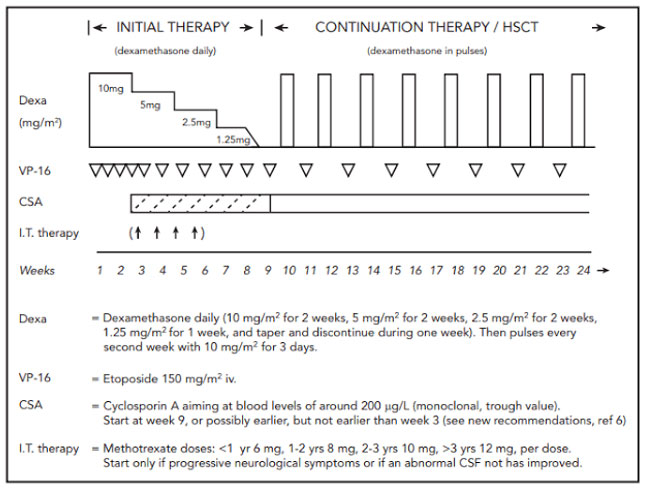
The hallmark of HLH pathophysiology is uncontrolled activation of macrophages and cytotoxic lymphocytes leading to excessive cytokine production (cytokine storm), multiorgan failure, and high mortality. Early diagnosis and therapy are vital to survival.
This case underscores the importance of considering HLH in the differential diagnosis of pyrexia of unknown origin (PUO) with cytopenias and systemic inflammation. Bone marrow evaluation, ferritin and triglyceride levels, and appropriate imaging (e.g., PET-CT) are critical in establishing the diagnosis and guiding management.
Key Learning Points
- HLH can masquerade as PUO in adults and should be suspected when accompanied by cytopenias, splenomegaly, and elevated inflammatory markers.
- Malignancy-associated HLH, especially due to lymphoma, is a medical emergency requiring prompt diagnosis and therapy.
- Bone marrow hemophagocytosis and high serum ferritin remain useful diagnostic clues in resource-limited settings.
- Steroids may be a lifesaving bridge until a definitive diagnosis and malignancy-directed therapy are initiated.
References
- Henter JI, Horne A, Aricó M, et al. HLH-2004: Diagnostic and therapeutic guidelines for hemophagocytic lymphohistiocytosis. Pediatr Blood Cancer. 2007;48(2):124-131.
- La Rosée P, Horne A, Hines M, et al. Recommendations for the management of hemophagocytic lymphohistiocytosis in adults. Blood. 2019;133(23):2465-2477.
- Machaczka M, Vaktnäs J, Klimkowska M, Hägglund H. Malignancy-associated hemophagocytic lymphohistiocytosis in adults: a retrospective population-based analysis from a single center. Leuk Lymphoma. 2011;52(4):613-619.
- Harrison’s Principles of Internal Medicine(21st Edition)

Dr. S. Akash Kumar
DNB Resident, General Medicine,
Kauvery Hospital[1], Chennai

Dr. S. Sivaram Kannan
Clinical Lead, Senior Consultant Internal Medicine,
Kauvery Hospital[1], Chennai

Dr. Arshad Raja
Consultant Hematologist,
Kauvery Hospital[1], Chennai