Mixed Antibody-Mediated and Chronic Active T-Cell-Mediated Rejection • Case Summary
| Clinical | 30-year-old female; living-related renal transplant20/08/2017; -9 years post-transplant; worsening grak function. |
| Laboratory | Creatinine 3.96 mg/dL; BUN 83.8 mg/dL; urine protein 1+; blood 1+; albumin 2.8 g/dL; Hb 10g/dL. |
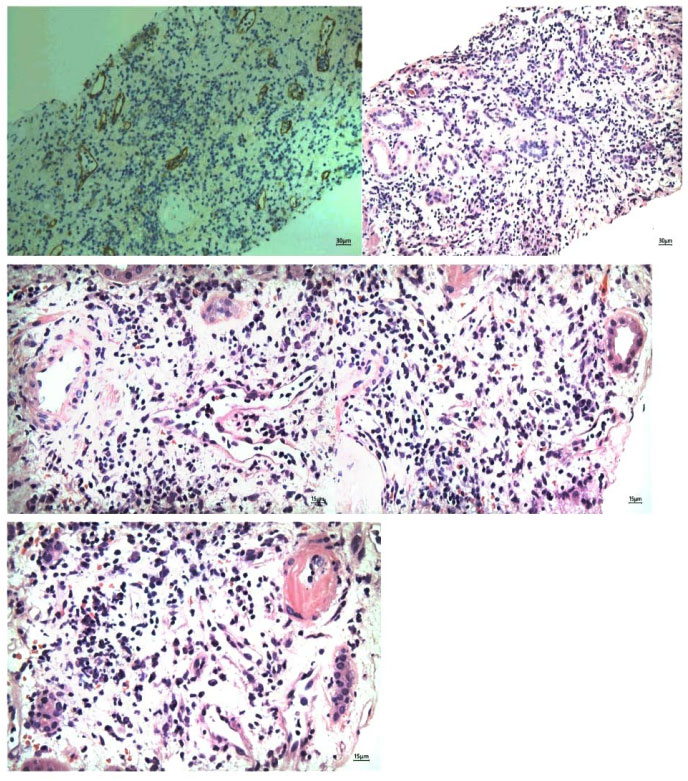
| Biopsy | 7/7 glomeruli globally sclerosed; 25-50% IFTA; dense interstitial inflammation; significant tubulitis; prominent peritubular capillaritis. |
| C4d | 3+ with linear staining in >50% peritubular capillaries. Supports complement activation and an antibody-associated process. |
| Interpretation | Antibody-mediated component plus chronic active T-cell-mediated rejection, Banff grade IВ, with substantial chronic allograft injury. |
| Treatment | IV methylprednisolone 500 mg OD for 3 days, followed by oral prednisolone. Creatinine improved to 1.5 mg/dL. |
What must be correlated
DSA, tacrolimus/cyclosporine lsvsJs, immunosuppression adherence, BK-virus PCR, prior biopsy findings and the renal
function trajectory. C4d alone should not be treated as sufficient for definitive ABMR classification.
Prognostic point
The creatinine response suggestsa steroid-responsive active inflammatory component. However, 25-50% IFTA and global
sclerosis of all 7 sampled glomeruli represent established chronic injury, some of which is irreversible.
Presentation closing line
“This case demonstrates that late renal allograft dysfunction may reflect simultaneous active immune-mediated injury and
advanced chronic scarring; accurate classification requires integration of biopsy findings with C4d and DSA.”
LATE RENAL ALLOGRAFT DYSFUNCTION
Mixed antibody-mediated + chronic active T-cell-mediated rejection
30-year-old female Living-related transplant 20 Aug 2017~9 years post-transplant
Presenting with azotemia / worsening graft function
Clinical & Lab Snapshot
- Creatinine 3.96 mg/dL; BUN 83.8 mg/dL
- Urine protein 1+; blood 1+
- Albumin 2.8 g/dL; Hb 10 g/dL
- TLC 12,800/µL; platelets 2.8 lakh/µL
- HBsAg / anti-HCV/ HIV non-reactive
Biopsy: Key Findings
- 7/7 glomeruli globally sclerosed
- 25-50% interstitial fibrosis / tubular atrophy
- Dense interstitial inflammation + prominent plasma cells
- Significant tubulitis
- Prominent peritubular capillaritis
- Moderate-severe arteriolar hyalinosis
Antibody-Mediated Component
- C4d 3+ with linear staining in >50% peritubular capillaries
- Peritubular capillaritis / microvascular inflammation
- Late graft dysfunction
- Correlate with DSA for definitive ABMR classification
Chronic Active TCMR
- Dense interstitial inflammation
- Significant tubulitis
- Inflammation involving established IFTA
- Reported as chronic active TCMR, Banff Grade IB
Prognostic Message
- Active injury may be treatment-responsive
- But 25-509a IFTA indicates established chronic scarring
- 7/7 globa II y sclerosed glomeruli indicate advanced chronic injury
- Some renal dysfunction is likely irreversible
Treatment in This Case
- IV methyl prednisolone 50 0 mg OD x 3 days
- For lowed by oral prednisolone
- Creatinine improved: 96 — 1.5 mq/dt.
- Response shows a steroid-responsive inflammatory component
KEY TAКЕ-НОME
Late graft dysfunction can contain both active rejection and irreversible chronic damage. ABMR assessment should integrate histology, C4d and DSA; chronic active TCMR is supported by inflammation/tubulitis in areas of IFTA.
Academic case summary • Prepared from the supplied case material

Dr Tamilaruvi
Nephrology 1st Year Resident
Kauvery Hospital, Chennai.[1]