
Back pain has long been considered a problem that affects primarily adults, but recent research reveals a surprising truth: Children and teenagers are experiencing back pain far more often than parents and doctors once believed. If your child complains of back discomfort, you’re not alone—and understanding what’s happening can help you provide better support and care.
How Common Is Back Pain in Young People?
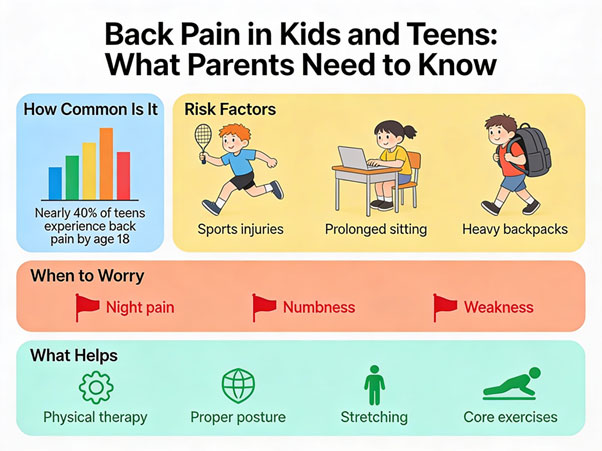
The numbers might surprise you. While older medical teachings suggest that back pain was rare in children, modern research has fundamentally changed our understanding. Studies show that by age 18, nearly 40% of young people have experienced back pain at some point in their lives. In fact, about one in three teenagers reports back pain in any given year. These statistics represent a dramatic shift from what doctors believed just a few decades ago, when back pain in children was considered unusual and always a sign of something serious.
The good news? Most childhood back pain is not serious. Research shows that many cases in adolescents are benign, self-limiting, and resolve on their own without requiring extensive treatment. This is an important distinction because it means parents don’t necessarily need to panic when their child mentions back discomfort—though certain warning signs do warrant professional evaluation.
Why Are Kids Getting Back Pain?
Several factors contribute to back pain in children and teenagers. Understanding these risk factors can help you take preventive steps:
Physical Activity Levels: Interestingly, back pain correlates with both high activity levels and sedentary lifestyles. Young athletes who engage in sports requiring repetitive backward bending, twisting, or heavy loading—like gymnastics, dance, baseball, and football—face higher risks of back pain. At the same time, children who spend too much time sitting or being inactive also experience increased pain. The key is balance.
Age and Growth: Back pain becomes more common as children get older. Teenagers are more prone to back problems than younger children, partly due to rapid growth spurts during adolescence and increased physical demands. As a parent, you should be aware that your child’s risk increases with age, making it important to monitor for symptoms during the teenage years.
Sports Specialisation: The modern trend of young athletes specialising in one sport year-round has increased back pain in children. What was once seen only in adolescent athletes now appears in younger children because they’re training intensively at earlier ages.
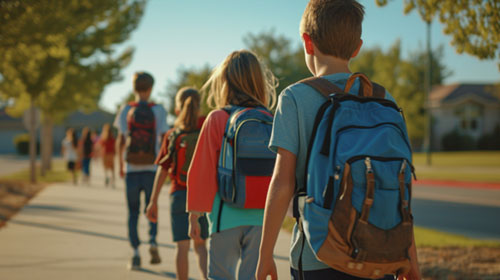
Heavy Backpacks: While not explicitly mentioned as a primary cause in research, the physical demands on growing spines during schooldays add stress that contributes to overall musculoskeletal strain.
Which Serious Conditions Cause Back Pain in Young People?
Most adolescent back pain has no identifiable serious cause and relates to muscle tightness, ligament strain, or weak core muscles. However, certain specific conditions can cause back pain in young people:
Spondylolysis and spondylolisthesis, disc herniation, Scheuermann kyphosis, apophyseal ring fractures, infection (discitis), tumours and autoimmune conditions.
When Should You Be Concerned?
While most childhood back pain is not serious, certain warning signs demand prompt medical evaluation.
Red Flags That Require Doctor Evaluation
- Nighttime pain or pain that wakes your child from sleep
- Unexplained weight loss, fever, or night sweats
- Numbness or tingling in the legs or groin area
- Loss of bowel or bladder control
- Severe pain that doesn’t improve with rest and over-the-counter medication
- Recent significant trauma or injury
- Pain with a fever or signs of infection
- Progressive neurologic symptoms
- Unusual bruising or bleeding
If your child has any of these warning signs, contact your paediatrician for evaluation and referral to a specialist if needed.
What Can Parents Do to Help?
Prevention and Management Strategies
- Encourage Proper Backpack Use: Ensure your child’s backpack weighs no more than 10-15% of body weight and is worn on both shoulders.
- Promote Core Strength: Regular exercises like planks, bridges, and bird dogs strengthen the muscles that support the spine.
- Support Good Posture: Remind children about sitting upright, especially during homework and screen time.
- Balance Activity Levels: Ensure your child has both adequate physical activity and appropriate rest, avoiding overtraining in single sports.
- Provide Ergonomic Support: Ensure school desks and home study areas support good posture.
- Maintain Healthy Weight: Extra weight increases stress on the developing spine.
- Encourage Flexibility: Regular stretching, especially of the hamstrings and hip flexors, reduces back strain.
- Limit Heavy Lifting: Young spines are still developing and vulnerable to injury from excessive loading.
- Monitor Sports Participation: If your child participates in high-risk sports, ensure proper technique and conditioning.
Research shows that back pain in adolescence often predicts back pain in adulthood. This is not cause for alarm—rather, it’s motivation to establish healthy spine habits now. Young people with back pain may also experience decreased quality of life and miss school days, making proper management important for academic success and social participation.
The encouraging news is that with appropriate treatment and prevention strategies, most children overcome back pain and maintain healthy spines into adulthood.

Dr. P. Keerthivasan
Consultant Orthopaedic Spine Surgeon,
Kauvery Hospital, Chennai