

Every year, in the first full week of February, the world observes Tinnitus Awareness Week. The aim is simple but important — to raise awareness about a condition that affects millions, yet is often misunderstood and ignored. Tinnitus refers to hearing sounds that do not come from any external source — ringing, buzzing, hissing, or whooshing — and is heard only by the affected person.
At first, tinnitus may seem harmless, noticed only in quiet moments. But when it persists, it can disturb sleep, affect concentration, and impact emotional well-being. It affects people of all ages — from teenagers to the elderly — and is far more than “just ear noise”.
What Is Tinnitus — In Simple Terms
Tinnitus is not a disease, but a symptom. It reflects an underlying problem in the ear or the nervous system. People experience it differently: ringing, buzzing, clicking, humming, or even roaring sounds.
The sound is not real, but the experience certainly is. The brain interprets abnormal signals from the ear or auditory nerve and perceives them as sound.
There are two types:
- Subjective tinnitus, heard only by the patient (most common)
- Objective tinnitus is rare, usually related to blood flow or muscle movement, and sometimes detectable by a doctor
Why Does Tinnitus Occur?
There is no single cause, and that is why tinnitus can be frustrating. Some common triggers include:
-
Loud Noise Exposure
Prolonged or sudden exposure to loud sounds — concerts, machinery, traffic, or high-volume earphones — can damage delicate inner-ear structures.
-
Hearing Loss
When hearing declines, the brain tries to compensate for missing sound signals, which may result in tinnitus.
-
Earwax or Ear Infections
Blockage or inflammation can alter sound transmission and trigger ringing.
-
Stress, Anxiety, and Poor Sleep
These do not cause tinnitus directly, but they make it louder and harder to ignore.
-
Medical Conditions and Medications
High blood pressure, blood vessel problems, and certain medicines can contribute to tinnitus.
When to Seek Help — Cut Through Assumptions
Many people delay consultation, assuming tinnitus is “normal” or untreatable. This is a mistake. You should consult an ENT specialist if:
- The sound is persistent or worsening
- It affects sleep or daily activities
- It is associated with hearing loss, dizziness, or ear pain
A proper evaluation can identify treatable causes such as wax, infection, or hearing loss, and rule out serious conditions. Early assessment prevents unnecessary anxiety and progression.
Is There a Cure for Tinnitus?
There is no universal cure that works for everyone — an important truth to understand. However, tinnitus can often be effectively managed. Management options include:
- Sound therapy to reduce awareness of tinnitus
- Hearing aids when hearing loss is present
- Counselling or behavioural therapy to reduce distress
- Lifestyle changes such as better sleep and stress control
The goal is not always to eliminate tinnitus, but to make it less intrusive and improve quality of life.
Prevention Is Better Than Cure
Simple habits can reduce the risk:
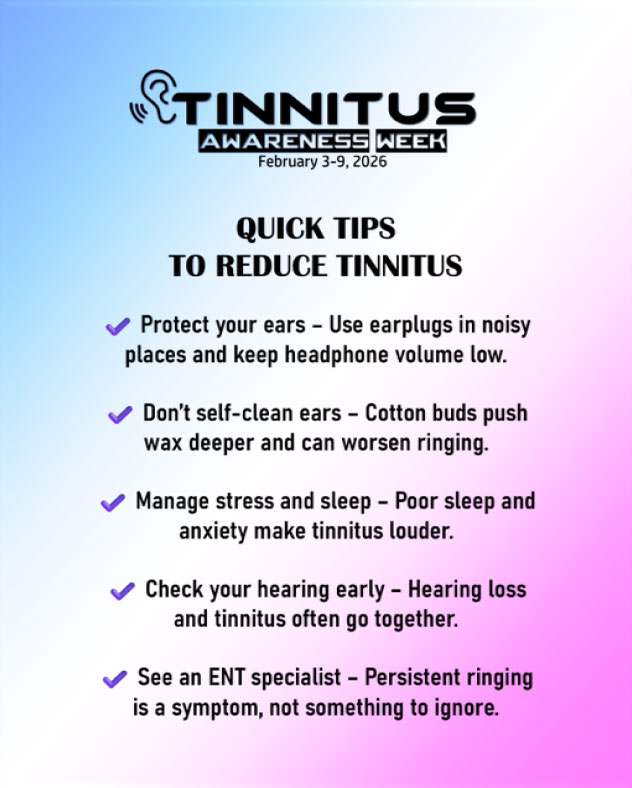
- Protect your ears in noisy environments
- Keep headphone volumes safe
- Avoid using cotton buds inside the ear, as they push wax deeper and may injure the ear canal
If you or a loved one experiences persistent ear noise, do not ignore it. Early evaluation and guidance can make a significant difference.
Why Tinnitus Awareness Matters
Tinnitus Awareness Week reminds us that this condition is common, real, and treatable in many cases. Talking about tinnitus reduces stigma, encourages early medical attention, and helps people regain control over their lives.

Dr. Kingston S
ENT & Head-Neck Surgeon,
Kauvery Hospital, Chennai