
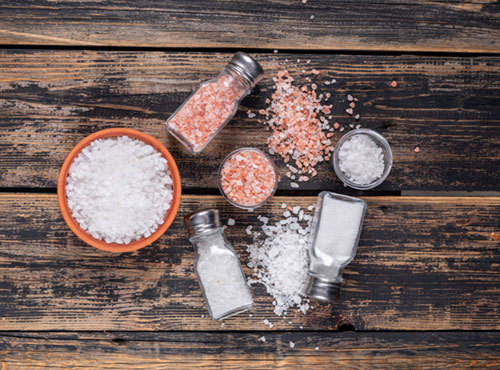
Salt is part of every Indian kitchen. From regular iodised salt to pink salt, black salt, sendha namak, and low-sodium salt, supermarket shelves are packed with choices. But which salt is actually healthier?
The answer may surprise you: The biggest health issue is not which salt we use, but how much we consume.
The World Health Organization (WHO) recommends less than 5 grams of salt per day for adults — roughly one teaspoon daily. However, the average Indian consumes nearly 10–12 grams per day, almost double the recommended amount. ICMR studies show that rural salt consumption is 7-9 g/day, while urban salt consumption is 10–12 g/day. This is alarming!!
Studies suggest that processed foods, restaurant meals, snacks, pickles, papads, sauces, and packaged items are the reason for this. Excess salt intake is strongly linked to high blood pressure, heart disease, stroke, and kidney disease. For decades, regular iodised salt has remained the best choice for household cooking because it not only provides saltiness but also supplies iodine, an important nutrient required for thyroid health and brain development in children. The WHO continues to support salt iodisation programs worldwide because iodine deficiency remains a public health concern in many regions.
Types of Salt Explained
| Type of Salt | What It Is | Key Points |
| Iodised Salt | Regular table salt fortified with iodine | Best choice for daily cooking. Iodine helps prevent thyroid problems and supports brain development in children. |
| Pink Salt (Himalayan Salt) | Rock salt with trace minerals | Looks attractive, but the minerals are present only in tiny amounts. It is not healthier than regular salt and often lacks iodine. |
| Black Salt (Kala Namak) | Sulphur-rich salt is commonly used in chaats | Has a strong flavour and may help reduce overall salt use, but its sodium content is similar to that of regular salt. Scientific proof for digestive benefits is limited. |
| Sendha Namak (Rock Salt) | Salt is commonly used during fasting | Marketed as “natural” or “pure”, but nutritionally it is still mainly sodium chloride. It is not proven to be healthier than iodised salt. |
| Low-Sodium Salt | Salt mixed with potassium chloride | Useful for some people with high blood pressure because it contains less sodium. However, patients with kidney disease or those taking certain medications should use it only after medical advice. |
A growing category today is low-sodium salt. Tata Salt Lite – Low Sodium Iodised Salt contains about 15% less sodium than regular iodised salt by replacing part of the sodium chloride with potassium salts. Tata Salt Super Lite goes a step further and contains nearly 30% less sodium compared to regular salt. These products are aimed at health-conscious consumers and people trying to reduce blood pressure risk. Research shows that reducing sodium and increasing potassium intake may help lower blood pressure and cardiovascular risk. However, low-sodium salts are not suitable for everyone. Since these salts contain added potassium, patients with chronic kidney disease, those on dialysis, transplant recipients, or individuals taking certain medications should use them only after consulting their doctor. Excess potassium can sometimes become dangerous in such patients.
At the end of the day, there is no magical “healthy salt”. Whether it is pink salt, black salt, sendha namak, or gourmet sea salt, moderation remains the key. The healthiest habit is not chasing expensive salts, but reducing overall salt intake while maintaining a balanced diet. Or as many Indian mothers have wisely said for years: “Konjam uppu kammi pannunga!” — sometimes the old advice still wins.

Dr. Balaji Kirushnan
Senior Consultant Nephrologist,
Kauvery Hospital, Chennai