
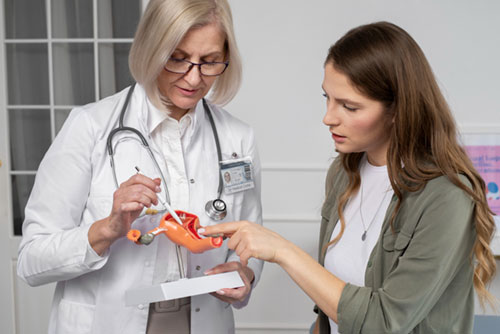
Uterovaginal prolapse is a frequently encountered yet underreported health issue in which the uterus sinks from its normal position into the vaginal canal due to the reduction in strength of the pelvic floor muscles and supporting ligaments. It is part of a broader category called pelvic organ prolapse, which may also involve the bladder or rectum.
It most often affects women after childbirth, particularly those with multiple vaginal deliveries, as well as women after menopause, when declining estrogen further weakens tissue support. Chronic cough, obesity, constipation, and heavy physical strain can accelerate the process.
Despite its prevalence, many women delay seeking care, either out of embarrassment, normalization of symptoms, or the belief that it is a natural, untreatable consequence of aging. That belief is incorrect.
What Women Experience
Symptoms can vary depending on severity, but commonly include:
- A sensation of heaviness or “something coming down”
- A visible or palpable bulge at the vaginal opening
- Difficulty passing urine or incomplete emptying
- Frequent urinary infections
- Constipation or difficulty with bowel movements
- Lower back discomfort
- Sexual discomfort or avoidance
In the early stages, symptoms may be mild. But prolapse is typically progressive if left unaddressed.
There is a persistent misconception that prolapse is merely a “quality-of-life” issue. In reality, untreated uterovaginal prolapse can lead to significant medical complications:
-
Progressive Worsening
Pelvic support defects do not self-correct. Over time, a mild prolapse can advance to complete uterine descent, making treatment more complex.
-
Bladder Dysfunction and Infections
Distortion of bladder anatomy can cause:
- Incomplete emptying
- Recurrent urinary tract infections
- Urinary retention
In severe cases, back-pressure can affect the kidneys.
-
Ulceration and Bleeding
Exposed vaginal or cervical tissue may develop friction ulcers, leading to:
- Bleeding
- Pain
- Secondary infection
-
Bowel Dysfunction
Rectal involvement can cause chronic constipation, straining, and a cycle that further worsens prolapse.
-
Impact on Dignity and Daily Function
Women often restrict movement, social interaction, and intimacy. This silent suffering leads to reduced quality of life, anxiety, and loss of confidence.
Ignoring uterovaginal prolapse is harmful.
- The condition is structural, not temporary
- It tends to progress, not stabilize
- Delayed care often means more invasive treatment later
- Early intervention offers simpler, more effective options
In modern practice, prolapse is highly treatable, often with excellent outcomes. The real risk lies not in treatment, but in neglect.
Management depends on severity, age, sexual activity, medical fitness, and patient preference. Options fall into three broad categories:
-
Conservative (Non-Surgical) Treatment
Pelvic Floor Exercises (Kegels)
- Strengthen pelvic floor muscles
- Useful in early stages or prevention
Pessary Devices
- Silicone supports placed inside the vagina
- Provide immediate symptom relief
- Ideal for women who:
- Want to avoid surgery
- Are medically unfit
- Need temporary control
These require periodic follow-up for cleaning and monitoring.
-
Surgical Treatment (Definitive Management)
Surgery offers the most durable correction, especially in moderate to severe prolapse.
Vaginal Hysterectomy with Pelvic Floor Repair
- Common and effective
- Removes uterus and restores support
Uterus-Preserving Surgeries
- For women who wish to retain the uterus
- Includes suspension procedures
Laparoscopic/Robotic Sacrocolpopexy
- Minimally invasive
- Uses mesh to support the vaginal apex
- Durable long-term outcomes
Choice of surgery is individualized and should be guided by a trained urogynecologist.
-
Adjunct Measures
- Weight management
- Treatment of chronic cough
- Avoiding heavy lifting
- Managing constipation
These help prevent recurrence and improve outcomes.
A Condition with Solutions, If Addressed Early
Uterovaginal prolapse is not rare, not trivial, and certainly not untreatable. It sits at the intersection of anatomy, aging, and life events, but modern medicine offers multiple effective pathways to restore comfort and function.
The most important step is recognition and timely consultation. Women should feel empowered to seek care early, without stigma or delay.
Conclusion
Uterovaginal prolapse is a treatable structural condition, not something to silently endure. Ignoring it allows progression, complications, and unnecessary suffering. Addressing it early opens the door to simpler treatments, better outcomes, and a return to normal life.
In this case, inaction is not benign; it is avoidable harm.

Dr Vaishnavi V L. MD MRCOG DFSRH CCT
Senior Consultant OBGYN and Urogynaecology
Kauvery Hospital, Chennai