
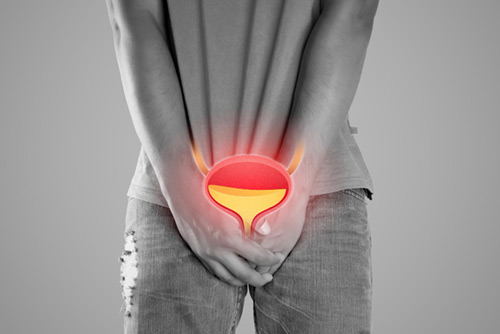
What Is Urinary Incontinence (UI)?
The involuntary or accidental loss of control of the bladder is urinary incontinence, i.e., the patient leaks urine without their control.
Are All Urinary Incontinences the Same? If Not, What Are the Types of UI?
No, urinary incontinence is not the same in everyone. They can be of various types.
-
Stress Urinary Incontinence:
Leaking of urine due to a sudden increase in intra-abdominal pressure such as during coughing, sneezing or straining.
-
Urge Urinary Incontinence:
A sudden desire to pass urine, but the patient is unable to hold on or control and passes urine before they reach the toilet.
-
Mixed Urinary Incontinence:
This type is a mixture of both stress and urge urinary incontinence
-
Overflow Incontinence:
This will occur when the urinary bladder is filled with urine, but the patient is unable to empty it as they desire; still, there is passage of some quantity of urine. This occurs due to leakage or overflow of excess urine from the bladder, which it is unable to hold onto further.
-
Continuous Incontinence:
There is a continuous leakage of urine without any control. This can occur due to abnormal connections between the urinary and genital tracts.
What Is an Overactive Bladder (OAB)?
This is a condition associated with urinary urgency and increased urinary frequency (during both the day and night), with or without urge urinary incontinence.
Are OAB and UI the Same? How Can We Differentiate Between the Two of Them?
While urinary incontinence is a part of the symptom complex of OAB, they are clinically different entities. OAB has the extremely distressing symptom of urinary urgency, and as a result, the patient is always at unease. There is usually no association of pain during urination or during a resting phase when the bladder is getting filled. This can lead to a high level of anxiety for the patient.
When Do I Need to See a Doctor?
The extreme symptoms of continuous urine leakage, urgency to pass urine, and increased urinary frequency are all indications to see the doctor, and to correctly diagnose, classify and thereby treat the condition.
What Tests Need to Be Done?
Basic blood and urine tests to assess kidney function, urine culture to rule out a UTI, and certain special scans such as an ultrasound or a CT to assess the volume of residual urine or presence of any other issues within the KUB (kidneys, ureter and bladder) tract may be done. Occasionally, there might be a need for certain more advanced tests such as urodynamic evaluation.
Why Should I Not Ignore It?
A few certain types of urine incontinence can be a sign of other issues that require treatment. Seeking appropriate guidance from a urologist will help resolve any doubts and treat the condition. A few patients with a stone in the ureter or a urinary tract infection might present in a similar manner.
What Are the Treatment Measures?
Initially, certain habit-related and lifestyle modification measures are taken, such as managing daily fluid intake, timely emptying of the bladder, avoiding excessive caffeine intake, weight reduction, and pelvic floor exercises.
Once the type of urinary incontinence has been identified, it will be treated accordingly. An overflow incontinence might require catheterization of the urinary bladder and certain medications. Urge urinary incontinence might require medication for bladder contractions. Certain patients with stress urinary incontinence may require surgery if they are not responding to conservative measures. Those with any abnormal connections of the genitourinary passage will require surgical correction for the same.

Dr. Anu Ramesh
Consultant, Dept. of Urology, Renal transplant and Robotic surgery,
Kauvery Hospital, Chennai