
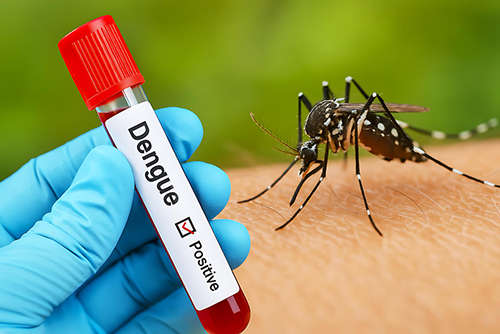
Mosquitoes are among the most common insects encountered in our everyday lives, often regarded as little more than a persistent nuisance. However, beneath their seemingly insignificant presence lies a far more serious threat to public health. Certain species, particularly infected female Aedes aegypti, can transmit the dengue virus, a pathogen responsible for dengue fever. The virus exists in four distinct serotypes: DENV-1, DENV-2, DENV-3 and DENV-4, all of which can cause infection and, in some cases, lead to severe, potentially life-threatening complications. What may appear to be an inconsequential mosquito bite can, therefore, have serious consequences.
Dengue fever can easily be mistaken for a common viral illness, but it is important to recognise the distinction, as dengue can progress to a severe, potentially life-threatening condition if not identified and managed promptly. While some patients remain asymptomatic, others can present with persistent high fever, severe headaches, pain behind the eyes, muscle and joint pain, nausea, vomiting, and skin rashes. When the fever starts to break, it’s easy to think that the worst is over. But with dengue, a falling fever doesn’t always mean recovery. In fact, this can mark the beginning of the critical phase, when complications may develop rapidly. Watching out for warning signs such as severe abdominal pain, persistent vomiting, bleeding from the nose or gums, blood in vomit or stools, unusual drowsiness or restlessness, cold and clammy skin, or difficulty breathing is crucial.
Although a falling platelet count is a common concern in dengue fever, the severity of the illness cannot be determined by platelet levels alone. In patients without bleeding manifestations, intervention may not be necessary. Platelet counts generally begin to improve during the recovery phase of the illness. However, the period when the fever subsides can be particularly critical, as plasma leakage may lead to a dangerous reduction in circulating blood volume. Hospitalisation and close monitoring over the next 24–48 hours may be essential in patients with warning signs to detect complications early and prevent progression to dengue shock syndrome, a life-threatening condition in which blood pressure can fall to dangerously low levels.
A simple blood test can help detect dengue infection. A positive dengue NS1 antigen test generally indicates a current, early-stage dengue infection. However, it is important to remember that a negative result does not rule out dengue, as the accuracy of the test depends on the stage of the illness and other factors. Serial complete blood counts (CBCs) and other lab parameters along with the patient’s overall clinical conditions are used to establish a diagnosis.
There are currently no specific antiviral medications for dengue, so management primarily focuses on supportive care, adequate hydration, and close monitoring for complications. Careful fluid administration and oral rehydration are crucial, especially during the recovery phase. It is best to avoid NSAIDs such as aspirin, ibuprofen, and naproxen, as they can increase the risk of bleeding. While paracetamol may be used to relieve fever and body aches, it should be used cautiously, especially when dengue-related liver involvement is suspected.
Preventing dengue is just as important as recognising the infection early and ensuring appropriate treatment. Prevention largely relies on avoiding mosquito bites and eliminating potential breeding sites. Since dengue-carrying Aedes mosquitoes breed in stagnant water, regularly emptying and cleaning water containers, flowerpots, buckets, and other areas where water can accumulate is essential. Using mosquito repellents, wearing protective clothing, installing mosquito nets on windows, etc., can help you avoid mosquito bites. Small, consistent preventive measures at both the individual and community levels can go a long way in curbing the spread of dengue.

Dr Sowmya Sridharan
Consultant – Infectious Disease,
Kauvery Hospital, Chennai