
Dear K-Way Readers,
As we stand at the close of 2026, it is time to pause, look back, and count our blessings.
November is often called the month of Thanksgiving, and I believe thankfulness is the finest emotion we can nurture in ourselves. True gratitude comes alive only when we expect nothing in return.
Take a simple example. A child who studies with passion and a love for learning will naturally feel thankful to her teachers and parents. But if there is only pressure to score, if parents believe that only a centum is a good score, then even after scoring 95, she will not enjoy her result. She will not value her own hard work. The joy of learning is lost, and with it, the grace of gratitude.
This truth applies to everything, especially to health.
We can all choose to be healthy, but the pressure of trying to be healthy is actually leading to wrong diet plans, expensive diet regimes and gyms, and finally a lack of consistency in everything.
This is increasingly true in parenting as well, where simple decisions about what and when to feed children have turned into stressful routines of calorie counting and strict measuring.
We should be thankful for the good health we have, just as we are. But today there is also a pressure from society to look fit, rather than to truly be fit, and that is not good.
As a family physician, I feel both responsible and privileged to be person-centric, family-centric, community-centric, and society-centric.
I believe every opportunity should be used to convey a message to benefit both physical and mental wellness.
So I would advise families to celebrate Children’s Day by resolving to preserve, protect, and propagate good health. And in the same spirit, to take the November festival as a moment to be thankful for the good health we were born with, and learn to cherish it, protect it, preserve it, and promote it.
I feel health preservation, conservation, and promotion should run through all our celebrations as a theme, like a river that makes life green and fertile, all while gurgling with fun and laughter.
November is a month of gentle reflection. It gives us a chance to think about two essentials of life: gratitude for what we have, and hope for what is to come.
We celebrate Children’s Day to remind us of the famous saying: “Children are the real wealth of a nation.” Behind the laughter, games, and sweets lies a deeper message: every child deserves education, good health, safety, and the freedom to play and dream. Raising a child is not about expensive gifts, but about giving time, values, and a healthy environment.
Thanksgiving, celebrated on the fourth Thursday of November, began as a simple harvest feast to say thank you for food and togetherness. It remains a practice for the heart. Research shows that people who practice gratitude sleep better, feel happier, and build stronger relationships.
Both observances quietly teach us the same healthy habits: to eat mindfully together without screens, to recall three good things before sleep, to step outside and play for thirty minutes, to speak kindly with a thank you and well done, and to follow simple routines of good sleep, water, and clean hands.
In simple words, one looks back and says “Thank you”, and the other looks forward and says “I will”. When health is the thread that binds both, life becomes truly beautiful: grateful for today and hopeful for tomorrow. And most importantly, teaching children to be healthy is the greatest gift we can give them for their future.
This November, let us teach our children not just how to be successful, but how to be grateful, healthy, and kind.
Wishing you all a very Happy Diwali, the festival of lights!
Have a great month ahead.
I would love to know what you think about our monthly newsletter. Feel free to give your feedback via email [email protected].
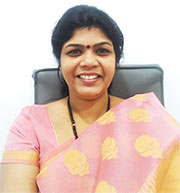
Dr. Kavitha Sundaravadanam
Senior Family Physician,
Kauvery Hospitals, Alwarpet
Highlights @ Kauvery
Kauvery Hospital Brings Cancer Survivors Together for Jailer 2
Kauvery Hospital organised a special movie screening for cancer survivors to watch Jailer 2 on its first day of release, accompanied by the oncology doctors. The initiative celebrated the spirit of survivorship, togetherness and the joy of life beyond cancer.


Kauvery Hospital Alwarpet Hosted ‘Back to Play’ to Promote Active Ageing Through Traditional Games
Chennai, October 15th , 2026: Kauvery Hospital, Alwarpet, organised ‘Back to Play’, an engaging programme for senior citizens that brought traditional Indian games back into focus, celebrating the joy of play while highlighting its role in healthy aging and cognitive well-being. The initiative was in collaboration with Kreeda, an organisation working on research and reviving Indian traditional games. The event had experts in geriatric care and neurology speaking about the significance of games in keeping the mind active.
The event offered senior participants an opportunity to revisit traditional games such as Aadu Puli Aatam, Paramapadham, Five Stones , Ashtaa Chemma, reconnecting with familiar pastimes in a lively and interactive setting. Beyond recreation, these games provided an enjoyable way to exercise the mind, encouraging participants to think strategically, make decisions and stay mentally active.
Traditional games can offer valuable cognitive stimulation as people age. Aadu Puli Aatam encourages strategic planning, logical thinking and anticipation of an opponent’s moves. Five
Stones involves hand-eye coordination, concentration, timing and motor skills, while Ashtaa Chemma engages players in counting, planning and decision-making. Together, these activities offer opportunities to practise attention, memory, problem-solving and strategic thinking in an enjoyable setting.
Keeping the brain active is an important part of healthy ageing. Regular engagement in mentally stimulating activities, combined with physical activity and social interaction, can support overall well-being and help seniors maintain an active lifestyle. Participating in group games also creates opportunities for conversation, laughter and meaningful social connections, contributing to emotional well-being and a sense of belonging.
Kauvery Hospital is committed to supporting the health and well-being of senior citizens through comprehensive geriatric care. Recognising that ageing often involves multiple and interconnected health needs, the hospital adopts a multidisciplinary approach that brings together specialists from different medical disciplines to support individual health requirements. This approach focuses on the prevention, diagnosis and management of age-related health conditions, while also addressing functional ability, mobility, cognitive well-being and quality of life. Through coordinated care and a focus on healthy ageing, Kauvery Hospital aims to help senior citizens maintain their independence, dignity and overall well-being at every stage of ageing.


Kauvery Hospital, Alwarpet, Treats Complex Aortic Valve Regurgitation Using Specialised HANCHOR Valve Technology
- Procedure addresses severe heart valve leakage caused by a perforated leaflet in a patient with a history of mitral valve replacement
- First of its kind procedure, for a patient with a perforated native aortic valve leaflet and a previous mitral valve replacement with dedicated TAVR for Pure Native valve Aortic Regurgitation (PNAR)
Chennai, October 29, 2026: Kauvery Hospital, Alwarpet, Chennai, has treated a complex case of Pure Native Aortic Regurgitation (PNAR) (Severe aortic valve leakage) in a 63-year-old man using the specialised HANCHOR valve through a transcatheter aortic valve replacement (TAVR) procedure. The case involved a perforation in the patient’s native aortic valve leaflet, along with a history of previous mitral valve replacement. According to the treating team, this is the first reported use of the HANCHOR valve in India for a patient presenting with this combination of clinical factors.
The aortic valve regulates blood flow from the heart into the aorta, the main artery that supplies blood to the body. When the valve does not close properly, blood flows backwards into the heart, a condition known as aortic regurgitation. In this patient, the leakage was severe and associated with a perforation in one of the valve’s leaflets, making treatment more complex.
Treating pure native aortic regurgitation through a catheter-based approach presents a specific challenge. Unlike aortic stenosis, in which calcium deposits can help secure a replacement valve, patients with pure native aortic regurgitation often have little or no calcification to support the implanted valve. This makes stable positioning and secure anchoring more difficult. The patient’s previous mitral valve replacement added another important consideration to the treatment planning.
The HANCHOR valve is designed to address the challenge of valve anchoring in pure native aortic regurgitation. It combines a balloon-expandable frame with a dedicated anchoring element made of nitinol, a flexible metal alloy. The anchoring mechanism is designed to engage the native valve leaflets and help stabilize the replacement valve, including in cases where the surrounding anatomy offers limited support.
During the TAVR procedure, the replacement valve was delivered through a catheter and positioned within the patient’s existing aortic valve. This minimally invasive approach allows doctors to replace the faulty valve without conventional open-heart valve replacement surgery, where clinically appropriate.
Following the procedure, the post-procedure assessment reported no residual aortic regurgitation, no valve stenosis and no paravalvular leak, which is leakage around the implanted valve. No significant abnormality in the heart’s electrical conduction was reported. The patient was discharged after 3 days.
Dr. Rajaram Ananantharaman, Senior Consultant Interventional Cardiologist Kauvery Hospital, Alwarpet, Chennai, said: “Pure native aortic regurgitation can be challenging to treat using a catheter-based approach because the limited calcium deposits in the native valve can make it difficult to secure a replacement valve. In this case, the perforation of the aortic valve leaflet, combined with the patient’s history of mitral valve replacement, added further complexity to treatment planning. The HANCHOR valve’s dedicated anchoring mechanism helped us address the challenges of valve positioning. The immediate post-procedure findings were encouraging, with no residual aortic regurgitation or leakage around the implanted valve reported. This case demonstrates the importance of individualised treatment planning and specialised valve technology in managing complex structural heart conditions.”
Commenting on the treatment, Dr. Aravindan Selvaraj, Co-founder and Executive Director, Kauvery Group of Hospitals, said, “At Kauvery, we are committed to advancing patient care through clinical expertise, innovation and the adoption of appropriate medical technologies. Cases such as this highlight the importance of combining specialised treatment approaches with careful clinical assessment to address complex cardiac conditions. We continue to focus on bringing advanced treatment options to patients while maintaining the highest standards of patient safety and care.”