
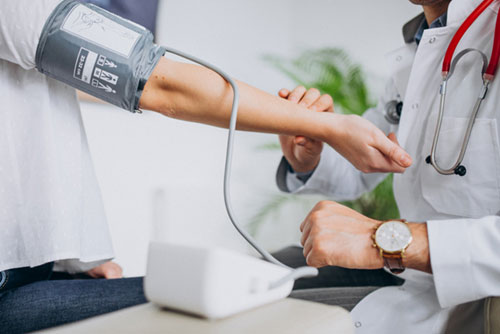
This World Health Day, let us educate ourselves on hypertension, which is a common cause of heart disease, stroke and kidney problems when left unchecked. By arming ourselves with the right information, we can take steps to prevent, detect and manage hypertension effectively.
What is Hypertension?
Hypertension, or high blood pressure, is when the force of blood against the artery walls is consistently too high.
It causes a persistent strain on your blood vessels.
How do we grade the blood pressure?
Blood Pressure Categories are
Normal
<120/80 mmHg (systolic <120 and diastolic <80
Then you’re good.
Mildly elevated BP
120-129 /80mm hg
watch lifestyle habits.
Hypertension Grade 1 (Mild)
130-139/80-89 mmHg
– Lifestyle changes and medication may be advised if any other medical comorbities are there.
Hypertension Grade 2 (Moderate)
≥140/90 mmHg
– Likely may need medicines + lifestyle and regular medical check-up.
Severe Hypertension Grade 3
≥180/120 mmHg
To seek medical attention as soon as possible
Why does one get Hypertension?
Factors contributing to hypertension are Genetics Unhealthy diet (high salt, low potassium) Lack of physical activity.
– Stress Obesity Smoking Excessive alcohol intake- Lack of sleep
– Certain medical conditions (kidney diseases/pheochromocytoma)
Also, certain criteria should be kept in mind before coming to a conclusion of Hypertension.
They are:
-
The age of the patient
Elderly people may have higher BP due to age-related vascular changes.
Consider age when assessing BP.
-
Fear of hospital surrounding
Can increase BP this is known as White Coat Hypertension, that is BP reads high in clinic due to anxiety.
We can record bp continuously for 24 hours using an ambulatory BP monitoring machine for accuracy and to check bp at home and office to know if patient has high bp always or not.
-
Accelerated Hypertension
Sudden onset of elevated BP we need to check for underlying medical causes like renal artery stenosis.
A condition where the renal artery carrying blood to the kidney is narrow and that may be causing elevated bp
-
Kidney Function and Blood Pressure is Interconnected
Undetected Hypertension or untreated kidney diseases can damage kidneys over a period time, leading to chronic kidney disease (CKD) causing high bp eventually presenting with a resistant high bp.
Kidneys are the main organs which regulate blood pressure.
Damage to the kidneys can worsen hypertension.
Hence the cause of high blood pressure is necessary to diagnose it as essential hypertension or not.
How does one manage this condition.
Firstly, an annual health check is mandatory
Lifestyle Changes
- Diet – Reduce high salt intake
- Exercise regularly (30 min/day) – Eat fruits, veggies, whole grains.
- Manage stress levels with meditation, yoga or seek medical help to manage stress.
- Limit alcohol, quit smoking.
- Improve sleep habits. Regular sleep timings and sleep hygiene is very important to maintain normal BP.
- Anti hypertensives or BP medication if prescribed, do not stop without consulting your doctor.
- Monitor your bp Use ambulatory BP monitor for accurate diagnosis; check BP regularly.
Additional investigations like:
- Carotid IMT Screening.
- Ultrasound of kidney to check the renal artery thickness (assesses atherosclerosis risk) or any chronic kidney disease.
- Lipoprotein(a) and Cholesterol levels to be checked.
LDL (“bad”) cholesterol should be checked.
Lipoprotein p(a) is a genetic risk factor for heart disease.
Hba1c glycaemic index like Hba1c to be checked to rule out diabetes and if needed to manage blood sugar levels.
Certain medications should be avoided, or certain medications should be used only on physicians’ advice.
For example,
Abuse of pain killers can increase the risk of kidney impairment causing elevated bp like NSAIDs (ibuprofen) can harm kidneys with long-term use, potentially raising BP. Don’t take pain medications without consulting a doctor.
Kidney damage can show up as high BP first, with increased creatinine levels.
Diet Advice to be followed.
Dietary advice
Dietary Approaches to Stop Hypertension – eat like it’s a party for your heart (fruits, veggies, whole grains, lean proteins)
Cut too much salt intake and avoid packeted foods or preserved foods and pickles – Limit sodium to <5 grams/day like avoiding extra salt in curd rice.
Choose low-GI foods (like brown rice, whole wheat, veggies) for better blood sugar control.
Another most important calculation to know the risk of onset of Hypertension is Healthy Lifestyle Score.
HLS assesses the risk of onset of Hypertension.
Physical activity ≥150 min/week.
Diet – balanced diet.
Balanced eating.
Smoker or non-smoker.
Alcohol intake.
BMI should be 18.5-24.9 kg/m²
A score is calculated.
1 point for each parameter each; 5 /5 = best. Higher the Score of HLS = lower hypertension, cardiometabolic risk.
Conclusion
Monitoring BP is vital because of the complications it can cause.
Hypertension can lead to some serious complications like
Heart failure and heart attacks.
Stroke (both Ischemic and Hemorrhagic).
Kidney damage or failure.
Vision problems (retinopathy) Peripheral artery disease.
For further queries kindly contact the department of family medicine.

Dr. Kavitha Sundaravadanam
Senior Family Physician,
Kauvery Hospital, Chennai