
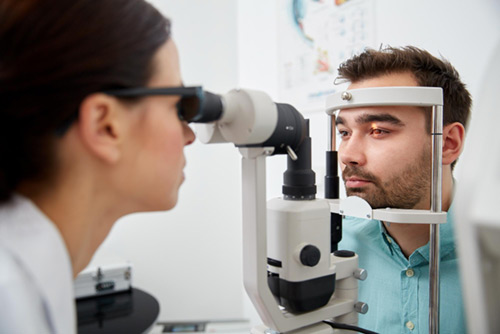
Even though many eye conditions occur in the older age group, the most common ones include:
- Cataracts
- Senile macular degeneration/Age-related macular degeneration
- Diabetic retinopathy
- Hypertensive retinopathy
- Senile ectropion
- Glaucoma
Senile Cataract
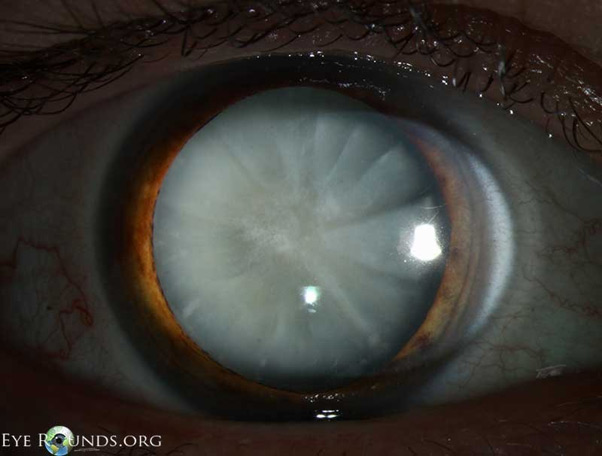
Cataracts can occur in all age groups but are frequently found in geriatric age groups. Cataracts can be congenital or acquired. Senile cataracts are acquired cataracts which can be classified into cortical or nuclear cataracts.
They occur due to the degeneration of already formed lens fibres due to ageing or any physical or chemical factor that disturbs the intra-/extracellular equilibrium of water and electrolytes. There are various stages of cataract. It can be immature cataract, mature cataract, or hypermature cataract.
The other types of senile cataract are:
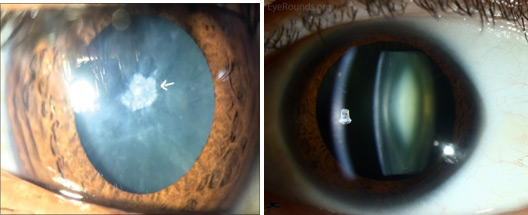
- Nuclear cataract due to the hardening or sclerosis of
- Cupuliform cataract due to the aggregation of particles in the posterior cortex beneath the capsule.
- Diabetic cataract where raised blood sugar levels (beyond 200 mg/ml) give rise to snowflake In diabetes, excess blood glucose gets converted to sorbitol, which accumulates in the lens fibres and causes osmotic imbalance.
Treatment of cataract depends on the extent of vision loss. Early vision loss due to cataract can be corrected with glasses. As the cataract matures, the power of the glasses tends to change, and patients are advised to check vision periodically and are recommended to change their glasses. In advanced stages of cataract, patients are advised to perform surgical extraction of cataract and intra-ocular lens implantation.
Senile Macular Degeneration
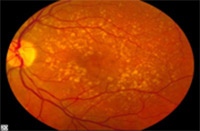
It is an age-related, bilateral, non-hereditary degeneration. It involves the retinal layers and photoreceptors in the visual area of the retina. It is the most common cause of permanent central visual loss in the elderly.
It can be:
- Dry ARMD (atrophic degeneration)
- Wet ARMD (due to the accumulation of serous fluid)
Treatment is palliative with laser and low vision aids.
Diabetic Retinopathy
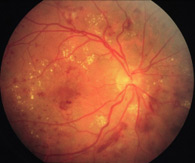
Even though diabetic retinopathy (DR) affects both young and old alike, it is more common in geriatric age groups because of the long-standing duration of the disease and comparatively poor control of blood sugar levels. It is often associated with arteriosclerotic and hypertensive retinopathy.
DR causes damage to the endothelial cells and the basement membrane of the retina. It can be background retinopathy, non-proliferative DR, or proliferative DR. Increased risk of visual loss is seen with new vessel formation, haemorrhage, secondary glaucoma, macular oedema, and cataract formation.
Treatment involves adequate and consistent control of blood sugar. Panretinal photocoagulation with laser vitrectomy and retinal detachment needs surgical repair.
Hypertensive Retinopathy
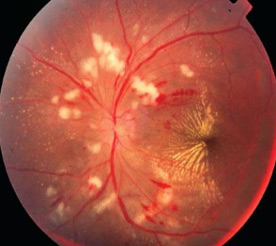
The retinal changes in hypertension are secondary to local retinal ischemia. Usually, there is thickening of the arteriolar wall, fibroid necrosis of the smooth muscle of blood vessels, and leakage of blood and plasma.
There are 4 grades of HR. Grade 1 is seen in milder forms of hypertension where visual loss is minimal; grade 4 in malignant hypertension with marked visual loss and cardio-renal damage.
Treatment is usually focused on consistent control of hypertension with antihypertensive medication.
Senile Ectropion
In this condition, the lid margin becomes lax and may roll outwards (ectropion) due to laxity of the orbicularis oculi muscle and other tissues of the lid. Patient symptoms are usually excess tearing from the eyes due to lack of opposition between the lacrimal system and the eye due to ectropion.
Treatment involves full-thickness shortening of the lid muscle by oculoplastic surgery.
Glaucoma
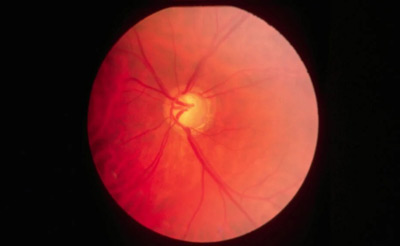
Glaucoma is progressive nerve weakness usually associated with raised eye pressure. It can be open-angle or closed-angle glaucoma. There is usually raised intraocular pressure, cupping of the optic disc, and visual field defects.
Treatment is usually aimed at decreasing the raised intraocular pressure with medications, laser, and surgery.
Dr. Sudha Bhuvaneshwari
Associate Consultant in Ophthalmology
Kauvery Hospital, Chennai