
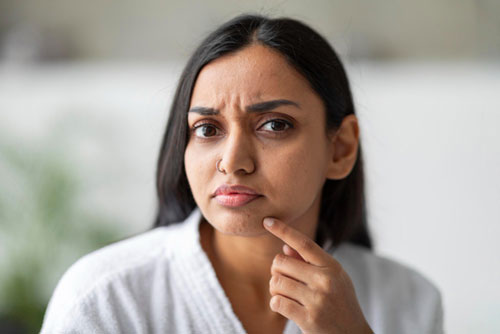
Perimenopause, the transition to menopause, brings about a series of hormonal shifts that can significantly affect the skin and hair. With the decline in estrogen and other hormones, women experience a variety of dermatological changes.
What Is Perimenopause and How Does It Affect Hormonal Levels?
Perimenopause, or the climacteric period, typically occurs in women in their late 40s to early 50s. This phase can last anywhere from 4 to 8 years, culminating in menopause. During perimenopause, the ovaries gradually decrease estrogen production, leading to hormonal fluctuations. This hormonal decline influences several physiological systems, including the skin and hair.
Estrogen plays a crucial role in maintaining skin hydration, elasticity, and collagen synthesis. As estrogen levels decrease, these processes are disrupted, resulting in several dermatologic and trichological changes. Similarly, androgen levels (such as testosterone) can increase relatively to estrogen, exacerbating certain changes in hair texture and growth patterns.
How Does Perimenopause Affect Skin Physiology?
Estrogen plays a vital role in maintaining the extracellular matrix (ECM), which is composed of collagen, elastin and glycosaminoglycans. As estrogen decreases during perimenopause, these structural proteins undergo a gradual decline, leading to the following skin changes:
Skin Thinning (Epidermal Atrophy)
With reduced estrogen levels, the epidermis (the outermost skin layer) undergoes thinning, a phenomenon referred to as epidermal atrophy. Estrogen maintains epidermal proliferation and barrier function, but with its decline, the skin becomes more vulnerable to environmental insults, leading to increased trans-epidermal water loss (TEWL) and dryness. Thinning of the epidermis also results in a greater propensity for skin tears, bruising, and irritation.
Loss of Elastin and Collagen (Dermal Atrophy)
The dermis, which houses collagen and elastin fibres, is significantly affected during perimenopause. Collagen synthesis is largely regulated by estrogen, and its reduction leads to collagen degradation and reduced dermal matrix density. As a result, skin elasticity diminishes, leading to sagging, wrinkling, and the development of fine lines.
Dryness and Xerosis
As estrogen declines, there is a concomitant reduction in sebaceous gland activity (oil production), leading to drier, less hydrated skin. The skin may become more rough, scaly, and more prone to irritation (xerosis). The reduction in lipid content in the stratum corneum further impairs the skin’s barrier function, leading to a greater susceptibility to dermatitis and infections.
Pigmentary Changes (Hyperpigmentation and Melasma)
The hormonal fluctuations in perimenopause, particularly the relative increase in androgens (testosterone), can stimulate melanogenesis in the skin. This can lead to the development of age spots or solar lentigines, especially on sun-exposed areas. Additionally, melasma, a condition marked by the appearance of dark patches (usually on the face), can be exacerbated during perimenopause due to fluctuations in estrogen and progesterone.
Acne and Rosacea Flare-Ups
Hormonal imbalances, particularly an increase in androgens, stimulate sebaceous glands to produce more sebum. This increase in oil can contribute to the formation of comedones, papules, and pustules, leading to adult-onset acne. Women in perimenopause may also experience a worsening of rosacea, a condition characterised by erythema, telangiectasias, and papulopustular lesions, which can be aggravated by the hormonal shifts.
How Does Perimenopause Affect Hair Health?
Perimenopausal hormonal changes also significantly impact hair. Estrogen plays an essential role in maintaining the anagen (growth) phase of hair follicles, while androgens promote hair follicle miniaturisation. As estrogen levels decline and androgens rise, women may experience several common trichological issues:
Androgenic Alopecia
Androgenic alopecia in females, or female-pattern hair loss, becomes more pronounced during perimenopause due to an increase in testosterone and dihydrotestosterone (DHT). These androgens bind to androgen receptors in hair follicles, particularly in the vertex, frontal and temporal regions, leading to miniaturisation of hair follicles and thinner hair strands. Initially, it starts with the widening of the central partition. Over time, hair density decreases, and the scalp may become more visible.
Telogen Effluvium
Hormonal fluctuations can also trigger telogen effluvium, a condition characterised by an increased number of hairs entering the telogen (resting/ falling) phase prematurely. This leads to diffuse shedding of hair, particularly noticeable on the scalp, and may be exacerbated by stress, poor nutrition, and sleep disturbances common during perimenopause.
Hair Texture Changes
With decreasing estrogen, sebaceous gland function in the scalp is impaired, leading to drier, more brittle hair. The cuticle layer of the hair may become damaged, making hair more prone to breakage, split ends, and frizz. Some women may also notice a change in hair colour, with increased greying due to reduced melanin production.
What Are the Dermatological Interventions for Perimenopausal Skin and Hair Changes?
Addressing perimenopausal skin and hair changes requires a comprehensive approach, which may include both topical treatments and in-office procedures.
Skincare Management
Moisturizers: Emollients containing hyaluronic acid, glycerine, ceramides, and squalane help restore moisture, repair the skin barrier, and improve skin texture. Products with lipid-based formulations are ideal for perimenopausal skin.
Sunscreen: Broad-spectrum SPF 30+ sunscreen is essential to prevent UV-induced photoaging, which exacerbates wrinkles, pigmentation, and collagen degradation. Physical sunscreens (zinc oxide, titanium dioxide) are often recommended for sensitive perimenopausal skin.
Topical Retinoids: These molecules, being derivatives of vitamin A, can stimulate collagen synthesis and improve skin texture. Retinoids also aid in treating hyperpigmentation by promoting skin turnover and reducing melanin production. Proper guidance is required as this is a prescription-based molecule.
Antioxidants: Topical and oral vitamin C, peptides, resveratrol, co-enzyme Q and glutathione combat oxidative stress and free radical damage, which accelerate skin ageing. These antioxidants help reduce the effects of environmental pollutants and sun exposure.
Collagen: Marine collagen has high bioavailability, and as it is primarily type 1, the most abundant collagen in human skin, it stimulates the body’s natural collagen synthesis.
Advanced Dermatological Procedures
Laser Resurfacing: Fractional CO2 lasers and erbium lasers are used to treat skin laxity, wrinkles, and hyperpigmentation by stimulating collagen production in the dermis. Laser resurfacing can also improve skin texture, reduce fine lines, and address age spots.
Intense Pulsed Light (IPL): IPL therapy is effective for treating sun-induced pigmentation and rosacea. It uses light energy to target melanin and haemoglobin in the skin, improving skin tone and reducing redness.
Microneedling: Microneedling or microneedling with radiofrequency (MNRF) can help treat skin laxity, wrinkles, and uneven pigmentation by stimulating collagen and elastin production. This is also effective in reducing scarring from acne and other skin conditions.
Platelet-Rich Plasma (PRP)/Injectable-Platelet Rich Fibrin: This involves extracting platelets from the patient’s own blood and injecting them into areas of the scalp or face to promote hair regeneration and skin rejuvenation. PRP stimulates hair follicle activity, improving hair density in cases of androgenic alopecia.
Botox: Botox injections help eradicate dynamic wrinkles and can be used on facial wrinkles and platysmal bands on the neck.
Fillers: The most commonly used filler injections are hyaluronic acid fillers which are used to correct tear trough deformity and saggy jowls and to improve sunken areas of the face where there is volume loss.
Energy-Based Devices: Procedures like High-Intensity Focused Ultrasound (HIFU) and Endolift are minimally invasive therapies to improve the sagging skin and wrinkles.
Newer Stem Cell Therapies: Exosomes/stromal vascular fraction/nanofat transfer.
Conclusion
Perimenopause represents a significant phase of hormonal change, with profound effects on skin and hair health. Estrogen depletion leads to skin thinning, loss of elasticity, and dryness, while androgenic changes contribute to hair thinning and acne. However, with a combination of topical treatments, advanced dermatological procedures and pharmacological interventions, many of these changes can be effectively managed.
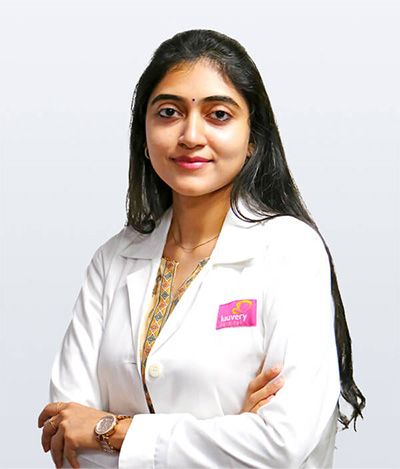
Dr. V. Madhumitha
Associate Consultant Dermatologist,
Kauvery Hospital, Chennai