
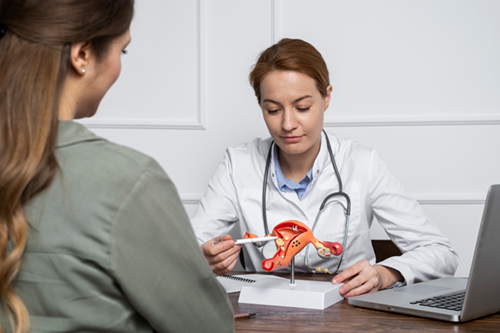
Premenstrual syndrome refers to the physical, emotional and behavioural symptoms that occur in the days before your menstrual period.
– Usually improves once bleeding starts
– Common among women of reproductive age
Causes
- Hormonal changes – estrogen and progesterone
- Chemical changes in the brain – serotonin imbalance
- Lifestyle factors – stress, poor diet and lack of exercise
Common Symptoms
Physical Symptoms:
Emotional Symptoms:
How to Diagnose PMS?
- There is no single test for PMS
- Keep a symptom diary for 2-3 days
- Rule out other medical conditions
A Few Tips to Manage PMS
- Eat a balanced diet rich in fruits, vegetables and whole grains
- Reduce salt, sugar, caffeine and alcohol
- Exercise regularly
- Get enough sleep
- Manage stress through yoga and meditation
- Pain relief with paracetamol in case of cramps and headaches
- Supplements such as calcium, magnesium and vitamin B6 may help
- If symptoms are severe, consult your gynaecologist for medical treatments
When to See a Doctor
- If symptoms interfere with daily life or work
- If you have a severe form of PMS
- If you notice new or worsening emotional symptoms

Dr. Shruthi Sreedhar
Consultant Obstetrician and Gynaecologist,
Kauvery Hospital, Chennai