
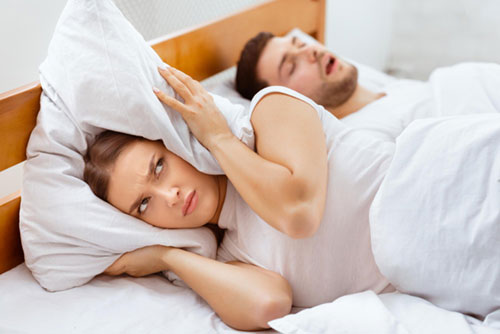
Snoring is often dismissed as normal or even joked about. That belief is wrong—and potentially dangerous.
Snoring is not a sign of deep or healthy sleep. It occurs when air struggles to pass through a partially narrowed airway, causing the throat tissues to vibrate. Occasional snoring during a cold or extreme fatigue may be harmless. However, loud, habitual snoring is abnormal and should never be ignored.
In many people, snoring is the first warning sign of obstructive sleep apnea (OSA).
What Is Obstructive Sleep Apnea?
Obstructive sleep apnea is a condition in which the airway repeatedly collapses or becomes blocked during sleep, leading to pauses in breathing called apneas. These pauses usually last more than 10 seconds and can occur many times each hour.
Each episode reduces blood oxygen levels and forces the brain to briefly wake up to restart breathing. Although the person may not remember these awakenings, sleep becomes fragmented and non-restorative, resulting in serious long-term health consequences.
Symptoms That Should Not Be Ignored
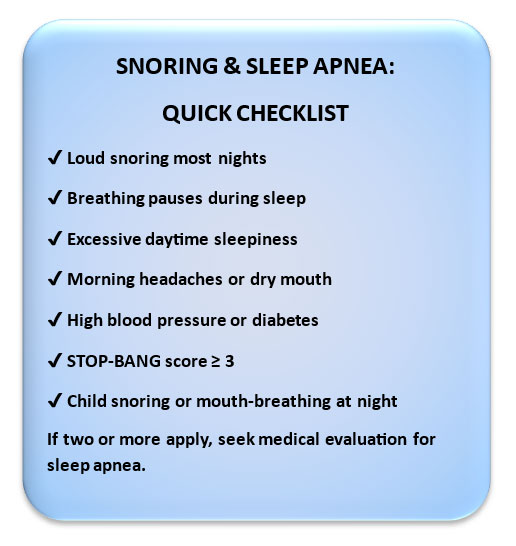
Common warning signs include:
- Loud, regular snoring
- Choking or gasping during sleep
- Excessive daytime sleepiness
- Morning headaches
- Poor concentration and memory
- Irritability or mood changes
- Difficult-to-control high blood pressure
Untreated sleep apnea significantly increases the risk of heart attack, stroke, diabetes, abnormal heart rhythms, and road traffic accidents.
Screening for Risk: The STOP-BANG Questionnaire
People can assess their risk of sleep apnea using a validated screening tool called the STOP-BANG questionnaire, freely available online.
STOP-BANG stands for snoring, tiredness, observed apnea, high blood pressure, body mass index, age, neck circumference, and gender. Each “yes” scores one point.
- 0–2: Low risk
- 3–4: Intermediate risk
- 5 or more: High risk
STOP-BANG does not diagnose sleep apnea, but it helps identify individuals who require formal evaluation without delay.
How Is Sleep Apnea Diagnosed?
The definitive test for sleep apnea is an overnight sleep study, also known as polysomnography. This painless test records breathing patterns, oxygen levels, heart rate, brain activity, and body movements during sleep, either in a sleep laboratory or, in selected cases, at home.
From this test, doctors calculate the apnea–hypopnea index (AHI).
What Is the Apnea–Hypopnea Index (AHI)?
AHI indicates how many breathing interruptions occur per hour of sleep:
- Normal: AHI < 5
- Mild OSA: AHI 5–14
- Moderate OSA: AHI 15–29
- Severe OSA: AHI ≥ 30
A higher AHI means more severe disease and higher health risk.
Treatment Options for Sleep Apnea
Treatment depends on severity, anatomy, and patient-specific factors.
Lifestyle measures are essential for all patients:
- Weight reduction
- Avoiding alcohol at night
- Smoking cessation
- Side-sleeping instead of sleeping on the back
CPAP therapy (continuous positive airway pressure) is the gold-standard treatment for moderate and severe OSA. It keeps the airway open using gentle air pressure and is highly effective when used regularly.
Oral appliances may benefit selected patients with mild to moderate disease, while surgery may be advised when there is a clear anatomical obstruction such as nasal blockage or enlarged tonsils.
Sleep Apnea in Children
Children can also suffer from sleep apnea, often without obvious daytime sleepiness. Instead, they may show hyperactivity, poor school performance, bedwetting, mouth breathing, or snoring. Enlarged tonsils and adenoids are the most common cause, and early treatment can greatly improve growth, behaviour, and learning.
Sleep Apnea in Women: A Blind Spot
As we observe International Women’s Day in March, it must be stated clearly: Obstructive sleep apnea is frequently missed in women. They often present with fatigue, insomnia, mood changes, or headaches rather than loud snoring, and these symptoms are easily dismissed by patients and clinicians alike. Social expectations and self-neglect further delay diagnosis, leaving women untreated for years and exposed to avoidable cardiovascular and metabolic risk. Sleep apnea is not a male disease, and ignoring it in women has consequences.
Final Message
Snoring is not a harmless noise. Persistent snoring is a medical symptom, not a joke. Sleep apnea is common, underdiagnosed, and highly treatable. Early recognition and treatment can prevent serious complications and significantly improve quality of life.

Dr. Kingston S
ENT & Head-Neck Surgeon,
Kauvery Hospital, Chennai