
A small sachet today could lead to a serious health problem tomorrow.
Mouth Cancer Action Month: November 2026
A pinch of supari after a meal, a packet of gutkha during a work break, or flavoured pan masala to refresh the mouth may seem harmless. These products are inexpensive, easily available, and often used as part of daily routines. Some people even believe that products without tobacco are safe.
That belief is dangerous.
As an ENT and head-neck surgeon, I want people to understand that the contents of these small packets can have a lasting impact on their oral health.
What Are These Products, Really?
Supari is the areca nut, also called betel nut. Pan masala usually contains areca nut, lime, spices, and flavouring agents, while gutkha contains areca nut, tobacco, and other ingredients. The exact composition varies between products.
The important fact is that areca nut itself is carcinogenic to humans, even without tobacco. Gutkha adds the additional dangers associated with smokeless tobacco. Neither a pleasant flavour nor attractive packaging makes these products safe. (Source: International Agency for Research on Cancer.)
The Hidden Damage Inside Your Mouth
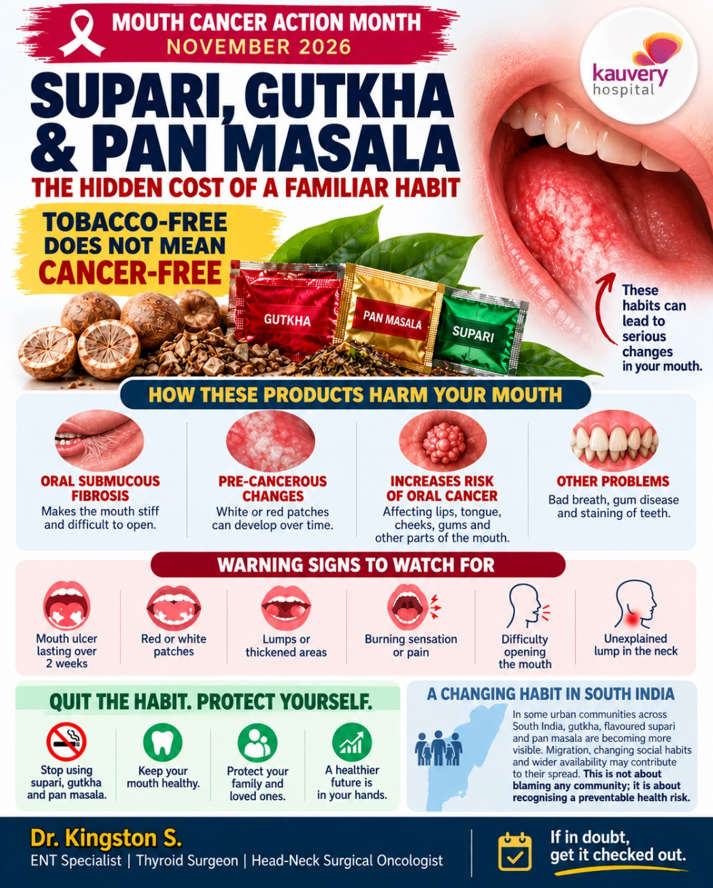
One of the most important conditions caused by areca nut chewing is oral submucous fibrosis. In simple words, the tissues inside the mouth gradually become stiff and lose their flexibility.
Initially, a person may experience a burning sensation while eating spicy food. Gradually, the mouth may become difficult to open. Eating, speaking, and maintaining oral hygiene can become increasingly challenging. This condition can be long-lasting and is associated with an increased risk of oral cancer.
These habits can also cause white or red patches, persistent ulcers, and other changes in the lining of the mouth. Some of these changes may develop into cancer.
Oral cancer can affect the tongue, gums, inner cheeks, lips, and other parts of the mouth. A lesion may initially be painless, which is precisely why people sometimes ignore it.
A Changing Habit in South India
In some urban communities across South India, gutkha, flavoured supari, and pan masala are becoming more visible. Migration, changing social habits, and the wider availability of packaged products may contribute to their spread, although the extent of this trend has not been firmly established by population-level evidence.
This is not about blaming any community; it is about recognising a preventable health risk. Areca nut is harmful regardless of who consumes it or where the habit originates.
Can You Chew Pan Masala Without Fear?
No. A product labelled as tobacco-free is not necessarily harmless if it contains areca nut. Even sweetened or flavoured supari can damage the mouth and increase cancer risk.
There is no established safe level of areca nut consumption. The safest choice is to stop using it completely rather than switching between different brands or flavours.
When Should You See a Doctor?
Do not ignore a mouth ulcer that persists for more than two weeks, white or red patches, unexplained bleeding, a lump, or increasing difficulty opening your mouth. A persistent neck lump or difficulty swallowing also needs medical assessment.
An ENT specialist or dentist can examine the mouth and arrange further investigations or a biopsy if required. Not every ulcer or patch is cancer, but suspicious changes should never be dismissed.
The earlier a problem is identified, the sooner appropriate treatment can begin.
A Message for Every Family
Quitting is not a sign of weakness; it is a decision to protect your health. If you use these products, seek help to stop, especially if cravings make quitting difficult. Encourage friends and family to do the same, and keep these products away from children and teenagers.
This Mouth Cancer Action Month, remember: what you put in your mouth today can affect your health for years to come.
Don’t wait for pain. Don’t wait for a warning to become serious.
If in doubt, get it checked out!

Dr. Kingston S
ENT & Head-Neck Surgeon,
Kauvery Hospital, Chennai