
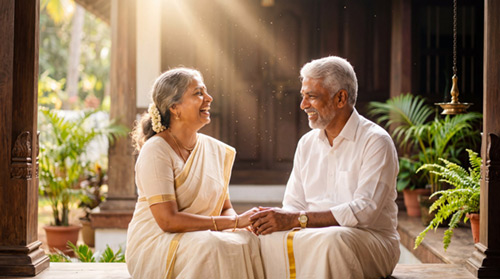
As the world’s population ages, the number of elderly people in India is also rapidly increasing. At present, 10% of India’s population are senior citizens, a figure expected to rise to 25% by 2036, driven by declining fertility rates and improving healthcare services. This is still considerably lower than several developed nations: in Japan, for instance, the elderly constitute 29% of the total population, underscoring that India’s ageing wave is only just beginning.
- Elderly today: 10%
- Projected by 2036: 25%
- Japan (for reference): 29%
The LASI Study: India’s Landmark Ageing Survey
The Longitudinal Ageing Study in India (LASI) is a landmark survey conducted by the Government of India, focusing on the economic, health, and social dimensions of older adults. It has studied over 75,000 adults across all states and union territories of India and is designed to be repeated once every five years for the next 25 years, making it one of the largest and longest-running ageing studies in the world.
Key LASI Findings
- 1065 women per 1000 men (elderly sex ratio)
- 54% of elderly women are widows
- 62:100 dependency ratio (non-working:working)
- 75,000+ older adults surveyed
These factors, combined with India’s diverse cultural and religious landscape, pose significant challenges in addressing the well-being of the elderly population. Because LASI captures health, economic, and social dimensions together, it gives the Government a robust evidence base for healthcare planning, elder-focused policymaking, and infrastructure development.
Health Factors Associated with Longevity
Ageing in India is accompanied by a distinct set of health challenges that geriatric care must anticipate and manage proactively:
- Multimorbidity: co-existing diabetes, hypertension, heart disease, kidney disease, and stroke
- Dementia and other memory-related disorders
- Recurrent falls leading to fractures
- Osteoporosis and cancers
- Infections and reduced immunity
- Sarcopenia & frailty (muscle weakness)
- Urinary incontinence and sleep disorders
Steps Individuals Can Take
- Regular physical activity
- A balanced, nutrient-rich diet
- Regular health check-ups and consistent follow-up
- Staying up to date with adult vaccines
- Never ignoring new or persistent symptoms
The Government of India has introduced a free national helpline for the benefit of the elderly: 14567.
Mobile Applications That Support Elderly Care
Medisafe: Helps manage medications and sends timely reminders so doses are never missed.
Magnifying Glass + Flashlight: Assists with magnifying small objects, labels and text, and provides a built-in flashlight for low-light reading.
Economic Factors Associated with Ageing
As highlighted by the LASI study, India’s old-age dependency ratio stands at 62 non-working individuals for every 100 working adults, meaning a shrinking working-age population must increasingly support a growing elderly cohort. This has several economic implications for India’s ageing society:
- Financial insecurity: A large proportion of the elderly, especially widows, lack independent income or pension coverage and depend entirely on family support.
- Limited pension and social security coverage, particularly among those from the informal work sector, which employs the majority of India’s workforce.
- Rising out-of-pocket healthcare expenditure due to multimorbidity, with limited penetration of health insurance among senior citizens.
- Elder financial abuse and exploitation, which remains under-reported due to social stigma and dependency on family caregivers.
- Low digital and financial literacy, making access to banking, pensions and government welfare schemes more difficult.
- Growing need for employment and re-skilling opportunities for the “young-old” (60–70 years) who remain capable and willing to work.
Government schemes such as the National Pension Scheme, Atal Pension Yojana, Pradhan Mantri Vaya Vandana Yojana, and the Rashtriya Vayoshri Yojana (which provides assistive devices to the elderly from the BPL category) aim to bridge this gap, but wider awareness, easier access, and last-mile implementation remain key priorities as India’s elderly population continues to grow.
Social Dimensions of Ageing
Beyond health and economics, LASI draws attention to important social realities: high rates of widowhood among elderly women, increasing instances of living alone or in nuclear-family settings as joint-family structures evolve, and the emotional impact of loneliness and social isolation. Community engagement, intergenerational bonding, and accessible elder-care support systems are essential to preserving the dignity and mental well-being of India’s seniors.
“Ageing is not a problem to be solved; it is a phase of life to be supported, respected and planned for.”
The Way Forward
India stands at a pivotal moment in its demographic transition. With the elderly population projected to more than double by 2036, a coordinated approach spanning preventive healthcare, geriatric-focused medical infrastructure, social security reform, and community support systems is essential. Studies like LASI provide the Government, healthcare institutions and policymakers with the data needed to plan responsibly for this “Age of Longevity”.
At Kauvery Hospital, our Department of Geriatric Medicine is committed to providing comprehensive, compassionate care for older adults, from managing multimorbidity and preventing falls to supporting cognitive health and enabling active, independent ageing.

Dr. K. Sushmitha
Associate Consultant – Geriatrics
Kauvery Hospital, Chennai