

A sudden nosebleed can be alarming. Whether it happens to a child during play, an adult at work, or an elderly person at home, the sight of blood often causes panic. Fortunately, most nosebleeds are harmless and stop with simple first aid. However, some may signal an underlying health problem that should not be ignored. Knowing what to do and when to seek medical help can make all the difference.
A nosebleed, also called epistaxis, occurs when a blood vessel inside the nose breaks. The nasal mucosa, or the inner nose lining, has numerous small blood vessels located just beneath the surface. As a result, they are easy to injure.
Common Causes of Nosebleeds
People of all ages can experience nose bleeds. Some of the most common causes include:
- Dry weather or prolonged use of air conditioning
- Frequent nose picking, especially in children
- Colds, allergies and sinus infections
- Forceful nose blowing or repeated sneezing
- Minor injury to the nose
- Certain medications such as blood thinners
- Uncontrolled high blood pressure, which can make bleeding more difficult to stop
- Rarely, nasal tumours or blood clotting disorders
What Should You Do During a Nosebleed?
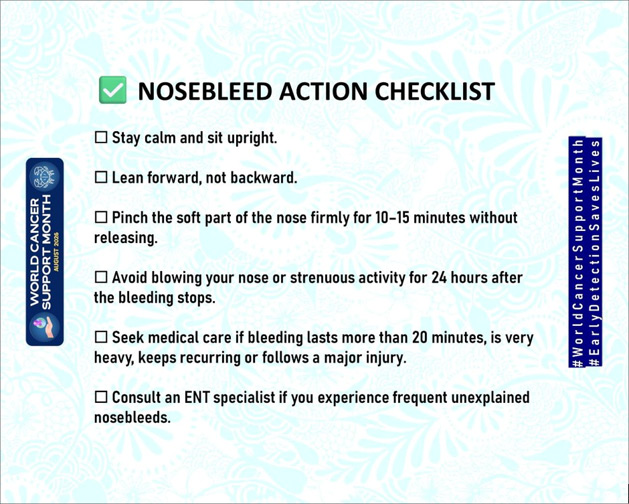
If a nosebleed occurs, remain calm and follow these simple steps:
- Sit upright and lean slightly forward. Do not tilt your head backwards, as blood may trickle into the throat and stomach.
- Gently press and hold the lower soft part of your nose using your thumb and index finger.
- Continue applying pressure for 10–15 minutes without letting go to check if the bleeding has stopped.
- Breathe through your mouth while holding pressure.
- After the bleeding stops, avoid blowing your nose, heavy lifting or strenuous exercise for the next 24 hours.
A cold compress placed over the bridge of the nose or cheeks may provide comfort, but the most important step is continuous firm pressure on the soft part of the nose.
When Should You Seek Medical Attention?
Although most nosebleeds settle on their own, you should consult a doctor if:
- The bleeding continues for more than 20 minutes in spite of proper pressure.
- The bleeding is heavy or keeps recurring.
- The nosebleed follows a significant injury to the face.
- You are taking blood-thinning medications.
- You feel dizzy, faint or unusually weak.
- The nosebleed is associated with a blocked nose, facial swelling, or a persistent nasal lump.
- Nosebleeds occur frequently without an obvious reason.
While most nosebleeds are not caused by cancer, persistent or recurrent bleeding from one side of the nose, especially when associated with nasal blockage, facial pain or swelling, or a neck lump, can occasionally be an early warning sign of a tumour of the nose, sinuses or nasopharynx. Early diagnosis greatly improves the chances of successful treatment.
An ENT specialist can identify the source of bleeding and recommend the appropriate treatment, which may include cauterisation, nasal packing or, in selected cases, a minor surgical procedure.
A Message for World Cancer Support Month
August is observed as World Cancer Support Month, reminding us that awareness, early diagnosis, timely treatment, and compassionate care can make a life-changing difference for people affected by cancer. While many cancers cannot be prevented completely, recognising early warning signs and seeking medical attention without delay can significantly improve outcomes.
At Kauvery Hospital, we are well-equipped with advanced diagnostic facilities, multidisciplinary expertise, and comprehensive treatment services to care for patients with head and neck cancers. From early detection and accurate diagnosis to surgery, rehabilitation and long-term follow-up, our team is committed to providing compassionate, patient-centred care.
Can Nosebleeds Be Prevented?
Many nosebleeds can be prevented with a few simple measures. Keep the inside of your nose moist by using saline nasal sprays or applying a thin layer of a doctor-recommended moisturising ointment if advised. Stay well hydrated, avoid picking your nose, trim children’s fingernails, treat allergies appropriately, and use protective equipment during sports. If you have high blood pressure, regular monitoring and good control are equally important for your overall health.
Most nosebleeds are harmless, but persistent, recurrent or unusually heavy bleeding should never be ignored. Early medical evaluation can identify the cause, provide effective treatment, and offer reassurance.

Dr Kingston S
Consultant, ENT & Head-Neck Surgeon
Kauvery Hospital, Chennai