

A Clinical Guide to Recognizing Early-Onset and Atypical Diabetes in Young Adults
Diabetes is often assumed to be a condition of middle age, but it can emerge at any stage of life, from infancy through young adulthood. What’s less widely understood is that a diabetes diagnosis in a young person doesn’t automatically mean type 1 or type 2. It could be a slow-progressing autoimmune form, an inherited single-gene condition, a consequence of pancreatic damage or medication, or a hormonal disorder. Correctly identifying which form is present is what allows for the right treatment and for preventing complications down the line.
How Early Diabetes Shows Itself
When blood glucose rises beyond what the kidneys can reabsorb, sugar spills into the urine and pulls water along with it; a process called osmotic diuresis. This sets off a recognizable chain reaction:
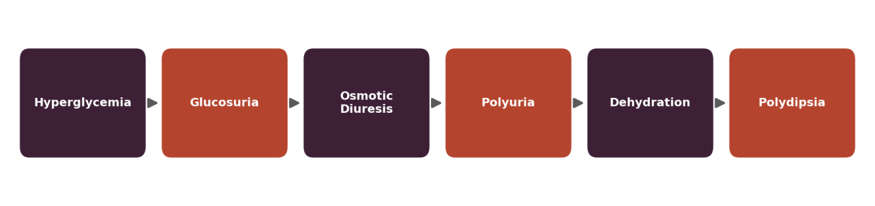
From there, a person may notice urinating more often, feeling thirstier than usual, unexplained hunger, weight loss without trying, fatigue, blurred vision, infections that keep recurring, or wounds that heal slowly. That said, early diabetes, particularly type 2 and several monogenic forms, can also be completely silent, with no symptoms at all until it’s picked up on a routine blood test.
Warning Signs Worth Paying Attention To
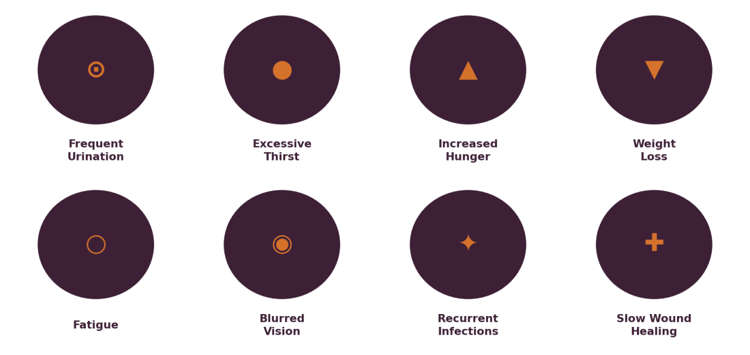
- Frequent urination, including waking repeatedly at night, or new bed-wetting in a child who was previously toilet-trained
- Persistent thirst that doesn’t ease no matter how much fluid is consumed
- Increased hunger driven by the body’s inability to use the glucose already in the bloodstream
- Unintended weight loss, especially alongside thirst and urination changes, as the body turns to fat and muscle for fuel
- Fatigue from tissues being starved of usable energy despite high blood sugar
- Blurred vision caused by fluid shifts within the eye’s lens
- Recurrent infections: urinary, genital, or skin infections in particular
- Slow-healing wounds
Don’t Assume It’s Type 1: The Wider Differential
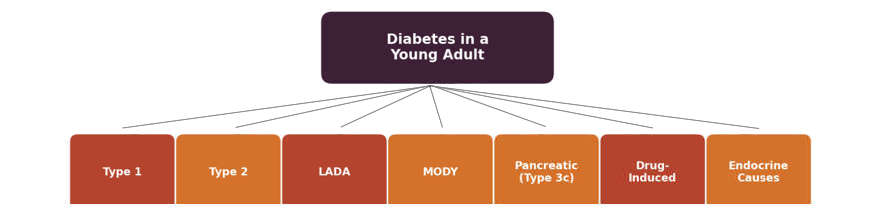
A young person presenting with diabetes could have type 1, type 2, LADA, MODY, neonatal diabetes, pancreatic (type 3c) diabetes, drug-induced diabetes, or diabetes secondary to an endocrine disorder. History, examination, and targeted lab work are what separate one from another.
Type 1 Diabetes
Here, the immune system mistakenly attacks and destroys the beta cells in the pancreas that make insulin. As a result, the body produces very little or no insulin, causing blood sugar levels to rise. While classically diagnosed in childhood, it can appear at any age and can progress quickly, sometimes presenting first as diabetic ketoacidosis (DKA).
DKA warning signs: persistent vomiting, abdominal pain, severe dehydration, rapid or deep breathing, a fruity odour to the breath, and drowsiness or confusion; this combination needs urgent medical attention.
Supporting tests include GAD, IA-2, and ZnT8 antibodies, insulin autoantibodies (ideally checked before starting insulin), and C-peptide, which interpreted alongside glucose level and disease duration, reflects how much of the body’s own insulin is still being made.
Type 2 Diabetes in Young People
This type is driven by a mix of insulin resistance and progressively declining beta-cell function. Risk rises with obesity, physical inactivity, family history, hypertension, dyslipidemia, metabolic syndrome, and a history of gestational diabetes. Importantly, body weight alone is not diagnostic; an obese young person can have type 1, and a lean one can have type 2.
LADA: Latent Autoimmune Diabetes in Adults
This is a slow-moving autoimmune diabetes that’s frequently mistaken for type 2 at first, since enough insulin is initially produced that treatment doesn’t seem urgent. Over time, autoimmune beta-cell loss catches up. Consider LADA in an adult with apparent type 2 diabetes who is lean, whose control deteriorates faster than expected, who responds poorly to standard type 2 therapy, or who has a personal or family history of autoimmune disease confirmed by positive islet autoantibodies and falling C-peptide.
MODY: Maturity-Onset Diabetes of the Young
This is a group of monogenic diabetes disorders, each caused by a single gene variant. The strongest clue is diabetes appearing across multiple generations at a young age: grandparent, parent, and child all affected. Suspect it when a young, lean patient has negative type 1 antibodies, preserved insulin production, and a clinical picture that simply doesn’t fit type 1 or type 2. Genetic testing confirms the diagnosis.
GCK-MODY
Mild, stable fasting hyperglycemia, often found incidentally, rarely progresses, and usually needs no treatment outside pregnancy.
HNF1A-MODY
Progressive insulin secretion loss, glucose in the urine due to a lower renal threshold, and marked response to certain sulfonylureas, a treatment detail that matters because it differs sharply from type 1 management.
HNF4A-MODY
Progressive beta-cell dysfunction, sometimes linked to high birth weight and neonatal hypoglycemia in affected pregnancies.
HNF1B-MODY
Notable for problems beyond the pancreas: renal cysts and congenital renal abnormalities, genitourinary issues, abnormal liver enzymes, and gout.
Neonatal Diabetes
Diabetes diagnosed within the first six months of life points strongly toward a monogenic cause, commonly involving the KCNJ11, ABCC8, or INS genes. It may be transient (resolving in infancy, sometimes recurring later) or permanent. Identifying the specific gene matters clinically, since some forms respond to oral medication instead of lifelong insulin.
Pancreatic (Type 3c) Diabetes
Diabetes can also result from direct damage to the pancreas from chronic pancreatitis, pancreatic surgery or cancer, trauma, or cystic fibrosis. Suspect it in anyone with known pancreatic disease, especially alongside chronic abdominal pain, weight loss, malabsorption, or steatorrhea.
Drug-Induced Diabetes
Glucocorticoids, some immunosuppressants, and certain antipsychotics can trigger or worsen hyperglycemia. A full medication history is essential whenever diabetes appears unexpectedly.
Diabetes from Endocrine Disorders
Cushing syndrome, acromegaly, pheochromocytoma, hyperthyroidism, and glucagonoma can all drive significant insulin resistance or excess glucose production, with diabetes as just one feature of a broader hormonal disorder.
Making the Diagnosis
| Test | Prediabetes | Diabetes |
| HbA1c | 5.7–6.4% | ≥6.5% |
| Fasting plasma glucose | 100–125 mg/dL | ≥126 mg/dL |
| 2-hour 75g OGTT | 140–199 mg/dL | ≥200 mg/dL |
| Random glucose + classic symptoms | — | ≥200 mg/dL |
These thresholds confirm that diabetes is present; they say nothing about which type it is. That distinction relies on further testing: islet autoantibodies (GAD, IA-2, ZnT8, insulin autoantibodies) to identify autoimmunity; C-peptide to gauge remaining insulin production; genetic testing when MODY or neonatal diabetes is suspected; and, where relevant, evaluation for pancreatic disease, endocrine disorders, or contributing medications.
A Practical Framework: Five Questions for New-Onset Diabetes in a Young Adult
- Is there evidence of autoimmunity? → Consider type 1 or slowly progressive autoimmune diabetes (LADA).
- Is there obesity with a typical metabolic-risk profile? → Consider type 2, but don’t stop investigating on this basis alone.
- Is there a strong multigenerational family history? → Consider MODY.
- Is there known pancreatic disease? → Consider type 3c (pancreatogenic) diabetes.
- Is there an unusual medication or an endocrine disorder in the picture? → Consider secondary diabetes.
At a Glance
| Feature | Type 1 | Type 2 | LADA | MODY | Type 3c |
| Onset | Often rapid | Usually gradual | Gradual | Variable | Variable |
| Typical age | Any | Any | Adults | Often young | Any |
| Obesity | Not required | Common | Not required | Usually absent | Variable |
| Autoantibodies | Often + | Usually − | Often + | Negative | Negative |
| C-peptide | Often low | Preserved early | Declines | Preserved early | Variable |
| Family history | Variable | Common | Variable | Strong, multigen. | Pancreatic disease |
| DKA risk | Significant | Lower, possible | Can occur | Usually low | Variable |
| Genetic cause | No | Complex/polygenic | Autoimmune | Yes | Usually acquired |
When to Seek Medical Evaluation
Get checked promptly if several of the following appear together: persistent thirst, frequent urination, unexplained weight loss, ongoing fatigue, recurrent infections, blurred vision, new bed-wetting in a toilet-trained child, a strong family history of early-onset diabetes, diabetes that isn’t responding as expected to treatment, or diabetes accompanied by other autoimmune, renal, or pancreatic problems.
The Bottom Line
Diabetes in a young person is never simply a choice between type 1 and type 2. The classic symptoms- thirst, frequent urination, weight loss, fatigue, blurred vision, and recurrent infections- can look nearly identical across very different underlying conditions. An adult with positive autoimmune markers may have type 1 or LADA. A family with diabetes across three generations may be dealing with MODY. Someone with both diabetes and kidney abnormalities may have a specific monogenic syndrome, while a patient with chronic pancreatitis may have pancreatogenic diabetes. Recognizing when the picture doesn’t fit the usual mould and testing accordingly is what leads to the right diagnosis and the right treatment.

Dr Lavanya
Registrar Department of Diabetology,
Kauvery Hospital, Chennai