
Lipoprotein (a)
- A new and effective therapeutic agent for treating Lp (a) has arrived! It is indeed a milestone in the evolution of therapeutic agents for Hyperlipidemias.
- Lipoprotein (a) is similar to LDL in structure, which is covalently bound with a unique protein called Apo lipoprotein (a), making it more complex. It quietly plays a significant role in premature atherosclerosis leading to cardiovascular diseases, calcific aortic valve stenosis, heart failure and stroke. The risk factor of Lp (a) applies to all individuals who have a strong family history of precocious heart disease. The elevated levels cannot be easily modified by diet and exercise due to the genetic makeup of the LPA One-time screening would be sufficient for most people to assess their risk of cardiovascular disease from elevated Lp (a)
- This bulletin going to discuss a new drug, which cleared its phase 2 clinical trial.
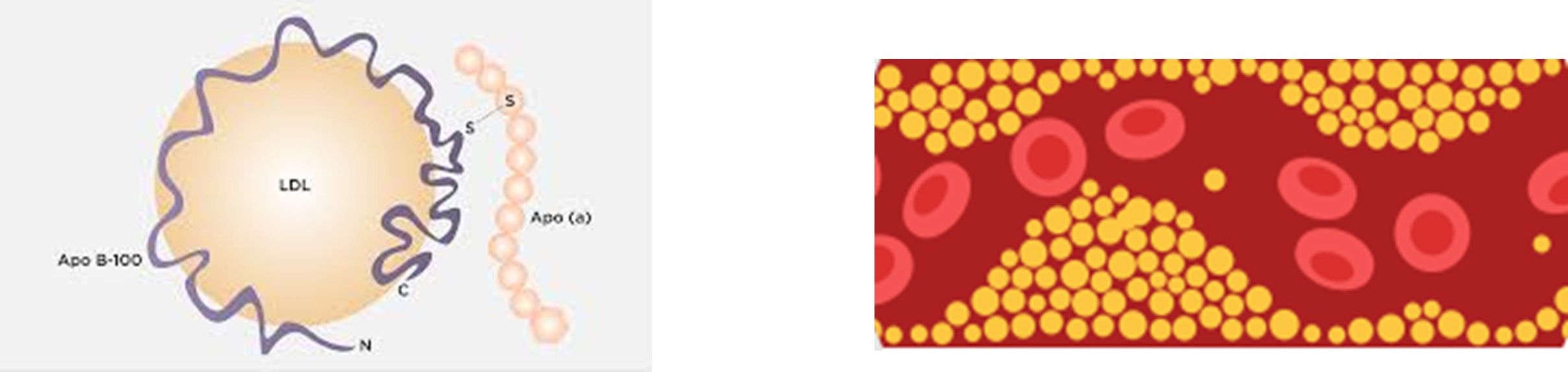
Images: American Heart Association
Discussion
- Current therapies for treating elevated Lp (a) were very limited in their efficacy. The statins and niacin have a limited impact on lowering Lp (a). On the other hand, we have specific monoclonal antibodies, which are injectable therapies that have only 20–30% effect on Lp (a), but are not cost-effective.
- A new simple small RNA molecule-targeting agent, oral Muvalaplin flashes a new light on the management of elevated Lp (a).
- Muvalaplin works by inhibiting the formation of Lipoprotein(a) (Lp(a)) by blocking the interaction between Apo lipoprotein(a) (apo(a)) and Apo lipoprotein B (apoB).
- In a recent phase 2 study by Stephen J. Nicholls et al, the oral doses of 10 mg, 60 mg, and 240 mg show a significant dose-dependent reduction of Lipoprotein (a) and Apo lipoprotein B.
- Long-term clinical data on the cardiovascular outcomes of Muvalaplin are needed to confirm its efficacy and safety profile. As more therapies emerge, and the outcomes are studies, the understanding of Lp (a)’s role in cardiovascular disease would result. The clinicians will have better tools to reduce cardiovascular risk from Lp (a) in patients.