
The Bulletin from the Clinical Pharmacist Methanol poison
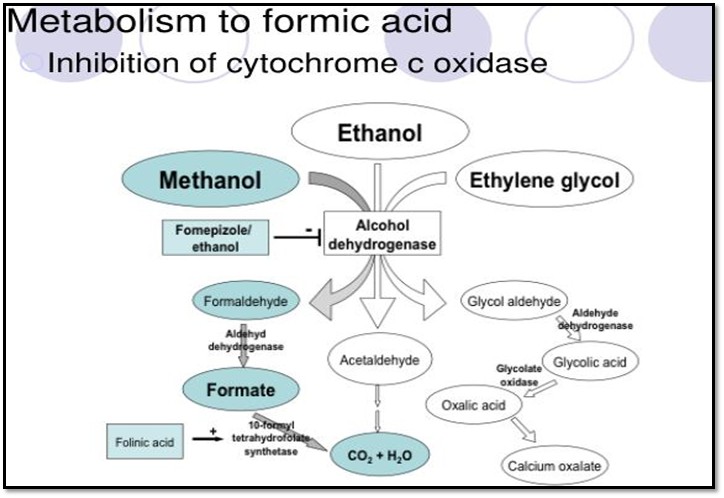
- Methanol poisoning occurs when methanol, a toxic alcohol, is ingested, inhaled, or absorbed through the skin. Methanol itself is relatively non-toxic, but it is metabolized in the liver to formaldehyde by alcohol dehydrogenase and then to formic acid by aldehyde dehydrogenase, both of which are highly toxic.
- Formic acid inhibits mitochondrial cytochrome c oxidase, leading to hypoxia and metabolic acidosis. The accumulation of formic acid in the body causes severe metabolic acidosis and damage to the optic nerve, potentially leading to blindness, respiratory failure, seizures, and coma.
Clinical Trail Findings
Discussion
- Fomepizole (Antizole, 4-Methylpyrazole or 4MP) is an antidote and an inhibitor of alcohol dehydrogenase.
- Fomepizole works by inhibiting the enzyme alcohol dehydrogenase. This enzyme is responsible for converting methanol and ethylene glycol into their toxic metabolites like formaldehyde and formic acid. By blocking this conversion, fomepizole prevents the formation of harmful substances, allowing the body to eliminate the unmetabolized toxins through the kidneys.
- When alcohol dehydrogenase is inhibited, clearance of methanol is prolonged from approximately 8.5 mg/dL/hr to an effective half-life of 45 to 90 hours. Fomepizole is given intravenously, with a loading dose of 15 mg/kg, and then maintenance dosing of 10 mg/kg every 12 hours for 4 doses or until the methanol concentration is less than 32 mg/dL with normal acid-base status.
- No changes in mental status, hepatotoxicity, or hypoglycemia occurred with the use of fomepizole. It appears to be a safe and effective treatment for patients with methanol poisoning.
Reference
Harrison, S. A., et al. “Resmetirom (MGL-3196) for the treatment of nonalcoholic steatohepatitis: a multicenter, randomized, double-blind, placebo-controlled, phase 2 trial.” The Lancet 394.10213 (2019): 2012-2024.