
Nutritional management after liver transplantation: Strategies for recovery and long- term health
Jothilakshmi N*
Clinical Dietitian, Kauvery Hospital, Hosur, Tamil Nadu
*Correspondence
Abstract
This case report describes the nutritional management of a patient who underwent Deceased donor liver transplantation (DDLT). Postoperatively, the patient developed hepatic artery thrombosis requiring emergency re-exploration. A stepwise progression from NPO to a high-protein diet along with regular nutrition assessment and biochemical monitoring, improved the patient’s nutritional status, recovery, and clinical outcomes. The case highlights the importance of individualized medical nutrition therapy in successful liver transplant recovery.
Key words: Deceased donor liver transplantation (DDLT); Wilson’s disease; Hepatorenal syndrome (HRS)
Case Presentation
A 29-year-old male with a history of liver cirrhosis and chronic liver failure secondary to Wilson’s disease (CHILD-C, MELD Na-18) has been under regular follow-up care. The patient underwent OGD with EVL in 2014. Recently, he developed ascites, for which he was started on diuretics. There is no history of hepatic encephalopathy, hepatorenal syndrome (HRS), or spontaneous bacterial peritonitis (SBP). Following a complete pre-transplant workup, he was registered for deceased donor liver transplantation (DDLT) and has now been admitted for the procedure.
Patients underwent deceased donor liver transplantation. Recipient hepatectomy was uneventful. Totally 11 units of Cryorecipitatep, Inj. Albumin, 2 units of FFP were transfused intra operatively. Patients were extubated on table and shifted to transplant ICU, managed with IV fluids, antibiotic, antifungal, Albumin, Inj. heparin and hepatoprotectives. Immunosuppressant Inj. Methyl prednisolone and Tab. Tacrolimus were started. Intermittent RT aspiration was done and patients started on clear liquid diet the next day. Regular monitoring of LFT, PT/INR and ABG were done. Blood reports were improving in trend. Doppler study of graft showed good flow. On POD-3 doppler study showed hepatic artery could not be visualized. ABG showed increase in lactate and liver enzymes started increasing. CECT abdomen showed no demonstrable hepatic artery opacification with focal abrupt cutoff of hepatic artery, with graft arising from aorta. Patients had hepatic artery thrombosis. Inj. Heparin dose increased. Patients’ condition and need for re-exploration were explained to attenders. After adequate arrangement of blood products and getting informed written high-risk consent from attenders, patient was immediately taken to OT. He underwent emergency re-exploration and hepatic artery thrombosis evacuation under general anesthesia.
Anthropometric measurements
- Height- 173cm
- Weight- 70 kg
- BMI-23.3 kg/m2
Pre-operative
- HGS-(RH)- 36.7kg (LH)-40.4kg
- MUAC-31.5cm
- NFPE: Mild muscle wasting+, ascites+; Impression:
Post-Operative Progression
1. Postoperative Day 0 (POD-0)
Following surgery, the patient was transferred to the Transplant ICU for continuous monitoring and observation. During the first 24 hours, the patient was maintained Nil Per Oral (NPO) and provided with intravenous fluids to ensure adequate hydration and support. Additionally, the patient received infusions of prescribed medications as part of the postoperative care protocol.
2. Postoperative (POD-1)
On the first postoperative day, the patient remained under medical care, receiving ongoing medication support as part of the recovery protocol.
3. Postoperative (POD-2 & POD-3)
On postoperative day 2, the patient was initiated on sips of water, which were gradually advanced to a liquid diet by the end of day 3. Meanwhile, intravenous fluids at 50 ml/hour were continued to ensure adequate fluid and electrolyte balance during this transition.
4. Postoperative (POD-5-7)
By postoperative day 5, the patient was transitioned to a soft diet, which was well-tolerated initially. However, the patient experienced a gradual decline in appetite, likely due to altered taste perception and frequent episodes of nausea, attributed to the ongoing antibiotic and corticosteroid therapy. To address nutritional needs, the patient was advised to consume a high-protein nutritional supplement three times a day, along with small, frequent meals to maintain adequate dietary intake.
5. Postoperative (POD-8 to POD-10)
During this period, the patient’s vital signs remained stable, with no evidence of graft site infection and clean surgical wounds. There was a notable reduction in gastrointestinal discomfort, and bowel movements became regular and stabilized. The patient was subsequently transferred to the ward, where weight and nutritional intake were closely monitored. Regular anthropometric assessments were conducted to evaluate the quality of nutritional intake, which played a significant role in supporting the patient’s recovery process.
On postoperative day 12, the patient was prepared for discharge. During this time, detailed counseling sessions were conducted to educate the patient about the prescribed medications and the home care plan. A personalized therapeutic diet plan, tailored to the patient’s regional and cultural preferences, was carefully developed and provided. The family was also counseled on the importance of postoperative nutritional care, including the role of dietary supplements in addressing nutrient depletion and preventing deficiencies. The patient was advised to attend follow-up appointments on an outpatient basis for continued monitoring and care.
Weight Variation chart
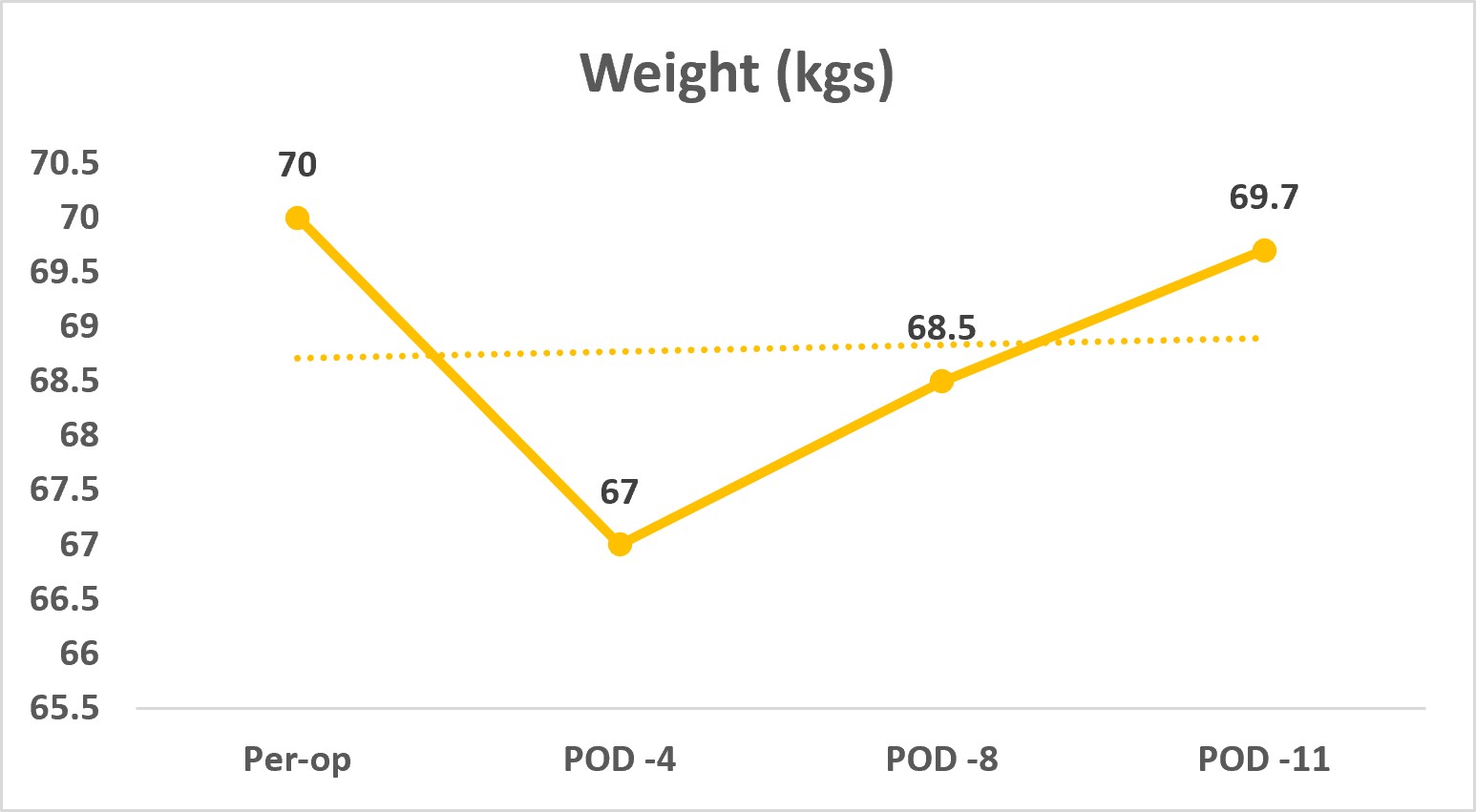
The dotted trend line moving across the chart shows a relatively stable overall average trajectory around 68.5 kg to 69.0 kg mark. This demonstrates that despite the sharp initial dip, the patient’s body mass is rapidly correcting back toward its pre-operative baseline.
Table 1: Vitals
| Parameter | (Per-op) | (POD-2) | (POD-6) | (POD-8) | (POD-11) |
|---|---|---|---|---|---|
| HR | 92 | 94 | 98 | 92 | 100 |
| RR | 18 | 20 | 18 | 20 | 22 |
| BP (mm/Hg) | 110/70 | 105/70 | 120/80 | 108/70 | 120/70 |
| SPO2 | 100 | 99 | 97 | 99 | 100 |
Table 2: Biochemical parameters
| Clinical parameter | (Per-op) | (POD-2) | (POD-6) | (POD-8) | (POD-11) |
|---|---|---|---|---|---|
| Hemoglobin (g/dl) | 11.6 | 9.7 | 8.8 | 9.5 | 11.8 |
| Bilirubin total (mg/dL) | 2.7 | 1.3 | 1.0 | 0.7 | 0.8 |
| Bilirubin direct (mg/dL) | 0.9 | 0.6 | 0.4 | 0.3 | 0.4 |
| Platelet count/mcl | 40000 | 28000 | 40000 | 68000 | 102000 |
| WBC | 2440 | 4630 | 3860 | 3540 | 13870 |
| Alkaline Phosphatase (IU/L) | - | 51 | 30 | 35 | 45 |
| Protein total (g/dL) | 2.7 | 5.4 | 4.8 | 4.5 | 5.0 |
| Albumin (g/dL) | 2.9 | 2.9 | 2.8 | 2.4 | 2.6 |
| Globulin (g/dL) | 4.5 | 32.5 | 2.1 | 2.1 | 2.4 |
| Neutrophil % | 56.7 | 88.2 | 71.0 | 71.4 | 81.9 |
| Lymphocyte % | 26.2 | 5.8 | 14.2 | 13.3 | 4.5 |
| Creatinine (mg/dL) | 1.0 | 1.2 | 1.0 | - | 1.2 |
| PCV | 35.2 | 29.6 | 26.9 | 27.7 | 34.8 |
| Monocyte % | 10.2 | 5.8 | 11.4 | 9.9 | 8.1 |
| Sodium (mEq/L) | 137 | 143 | 138 | 135 | 131 |
| Potassium (mmol/L) | 4.0 | 3.6 | 3.4 | 3.8 | 4.6 |
| Chloride (mEq/L) | 110 | 115 | 111 | - | - |
| Urea (mg/dL) | 21.1 | 90.3 | 81.3 | - | 39.5 |
Results and Discussion
Normal hepatic innervation, including vagus nerve connections, is disrupted during liver transplantation. This loss of autonomic regulatory control has been suggested to influence various physiological processes, including nutrient absorption, metabolism, glucose and lipid homeostasis, as well as appetite signaling and eating behavior. These changes may collectively contribute to the alterations in body composition and weight fluctuations observed in post-transplant patients
Immunosuppressive therapy, a cornerstone of post-transplant management, is known to affect metabolic processes significantly. These medications can increase appetite, promote fat deposition, and reduce fat oxidation, while simultaneously enhancing proteolysis and impairing protein synthesis. Drugs such as cyclosporine and tacrolimus have been shown to influence energy metabolism and muscle mass and are recognized as independent predictors of post-transplant weight gain. Additionally, they have been reported to elevate energy expenditure.
Both cyclosporine and tacrolimus may hinder muscle growth and regeneration by inhibiting the mammalian target of rapamycin (mTOR) complex, a critical regulator of protein synthesis. This inhibition can lead to metabolic complications such as hypertriglyceridemia, hyperglycemia, hyponatremia, and hypokalemia, further impacting the patient’s recovery and overall health.
Goals of Medical Nutrition Therapy (MNT) for Post-Transplant Patients
Ensure the patient achieves an adequate nutritional intake to support recovery
- Restore nutrient levels that were depleted during the preoperative and perioperative phases.
- Promote the healing of surgical wounds and anastomoses.
- Maintain and protect lean body mass.
- Meet the body’s increased metabolic needs after transplantation.
- Minimize catabolic processes and encourage anabolism through a diet rich in calories and protein.
- Address and prevent deficiencies in micronutrients.
- Emphasize the importance of food safety and maintaining hygienic practices to reduce the risk of infections.
Diet recommendation
- High calorie high protein diet
- Target: Energy-2190 kcals, Protein-109 g, Carbohydrate- 328 g, Fat-20 g
- Nutrient recommendation
- Energy:30-35kcals/kg IBW
- Protein:1.5-2.0g/kg IBW
- Carbohydrates:50-60% of the energy value
- Fat:15-20% of the energy value
Table 3: Comparative-table of patients’ nutritional intake- during Pre-Op, Post-Op and follow – UP
| Pre/ post op days | Type of diet | Energy (Kcals) | Protein (g) | Kcal % | Protein % |
|---|---|---|---|---|---|
| Pre-op | High protein diet, NPO for solids befour post | 1460 (Kcal) | 70g | 66.6 | 64 |
| POD-0 | NPO | Nil | Nil | - | - |
| POD-1 | Sips of water | Nil | Nil | - | - |
| POD-2 | Sips of water - Clear liquids as per tolerance (20 ml) | 50 (Kcal) | 2 g | - | - |
| POD-3 | NPO | Nil | Nil | - | - |
| POD-4 | Sips of water - Clear liquids as per tolerance (20-30 ml/hourly) | 300 (Kcal) | Nil | 13.6 | - |
| POD-5 | Liquids diet | 700 (Kcal) | 5 g | 31.9 | 5 |
| POD-6 | Semisolid diet | 900 (Kcal) | 40g | 41 | 37 |
| POD-7 | Semisolid diet | 1200 (Kcal) | 45g | 54.7 | 41.2 |
| POD-8 | Soft diet | 1100 (Kcal) | 50g | 50.2 | 45.2 |
| POD-9 | High protein soft diet | 1200 (Kcal) | 48g | 54.7 | 44 |
| POD-10 | High protein soft diet | 1600 (Kcal) | 60g | 73.0 | 42.2 |
| POD-11 | High protein Normal diet | 1900 (Kcal) | 90g | 87 | 82 |
Recommended meal plan
| Timing | Menu | Serving |
|---|---|---|
| Early Morning 6.00 am | Plain milk + Resource Hepatic 4 scoops | 150 ml |
| Breakfast 8.00 am | Millet Idly/ Dosa / Upma/ Oates | 3 no’s / 3/4 cup |
| Breakfast 8.00 am | Vegetable Sambar / Tomato chutney / Onion chutney / Garlic chutney | 1 cup |
| Breakfast 8.00 am | Egg white / Paneer (weekly 2 times) | 2 no’s |
| Breakfast 8.00 am | Curd | 1 cup |
| Mid Morning 11.00 am | Fruits salad / Vegetable salads / Sprouts / Buttermilk / Soup | 1 cup |
| 12.00 pm | Milk (Resource Hepatic 4 scoops) | 150 ml |
| Lunch 1.00 pm | Rice / Chapathi / Curd rice / Sambar Rice | 1 cup / 3 no’s |
| Lunch 1.00 pm | Sambar | 1 cup |
| Lunch 1.00 pm | Vegetable poriyal | 1 cup |
| Lunch 1.00 pm | Greens poriyal (weekly 3 times) | 1 cup |
| Lunch 1.00 pm | Buttermilk / Curd | 1 cup |
| Lunch 1.00 pm | Or Egg white / Pulses / Paneer / Chicken | 2 no’s / 100 g |
| Evening 4.00 pm | Plain milk | 100 ml |
| Evening 4.00 pm | Sundal / Corn / Rice flakes | 1 cup |
| Dinner 8.00 pm | Chapati / Phulka / Wheat dosa / Upma / Idly | 2 no’s / 3/4 cup |
| Dinner 8.00 pm | Vegetable Poriyal / Sambar or Egg white / Pulses / Paneer / Chicken | 100 g / 2 no’s |
| Bedtime 9.00 pm | Plain milk + Resource Hepatic 4 Scoops | 150 ml |
Review and follow up
Maintaining a strict follow-up routine for diet and medical investigations is vital to protect your new organ, ensure proper healing, and manage life-long anti-rejection medications. Because your immune system is deliberately suppressed to prevent rejection, your nutritional choices must focus heavily on food safety and metabolic stability, while your diagnostic tests will carefully track your organ function and medication levels.
Follow up weight
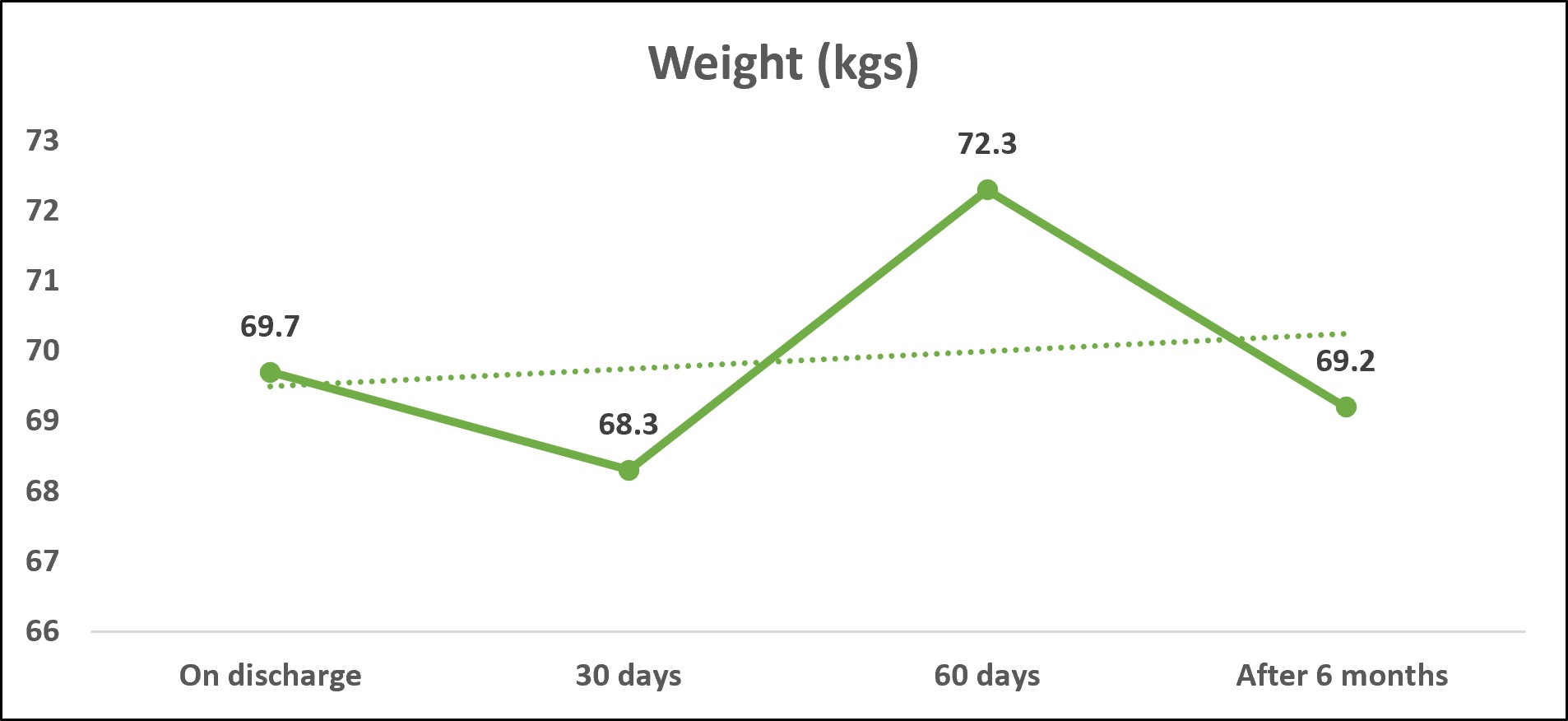
Based on the provided trend graph, the clinical interpretation of the weight fluctuations in a post-operative liver transplant patient is outlined below:
Initial Weight Loss (Discharge to 30 Days)
Trend: Decreased from 69.7 kg to 68.3 kg.
Clinical Significance: Early weight loss within the first month is common and expected. It typically represents the resolution of post-surgical edema (fluid retention) or pre-transplant ascites, along with the standard metabolic stress of recovery.
Acute Weight Gain Spike (30 to 60 Days)
- Trend: Increased sharply from 68.3 kg to 72.3 kg (+4.0 kg).
- Clinical Significance: A sudden spike of this magnitude within 30 days is a critical clinical marker that requires immediate evaluation.
- Fluid Retention: It could indicate fluid overload, potentially secondary to acute kidney injury (a known adverse effect of calcineurin inhibitors like tacrolimus) or early graft dysfunction leading to re-accumulation of ascites.
- Medication Side Effects: High-dose corticosteroid regimens (e.g., prednisone) used to prevent rejection commonly trigger increased appetite and fluid retention around this phase.
Weight Stabilization (60 Days to 6 Months)
Trend: Stabilized downward to 69.2 kg.
Clinical Significance: This drop suggests that the previous acute issue (such as fluid volume overload) was successfully managed or resolved, and corticosteroid doses were likely tapered down. The overall dotted trendline shows a mild upward baseline, which aligns with long-term recovery, return of normal appetite, and improved metabolic health.
BMI readings
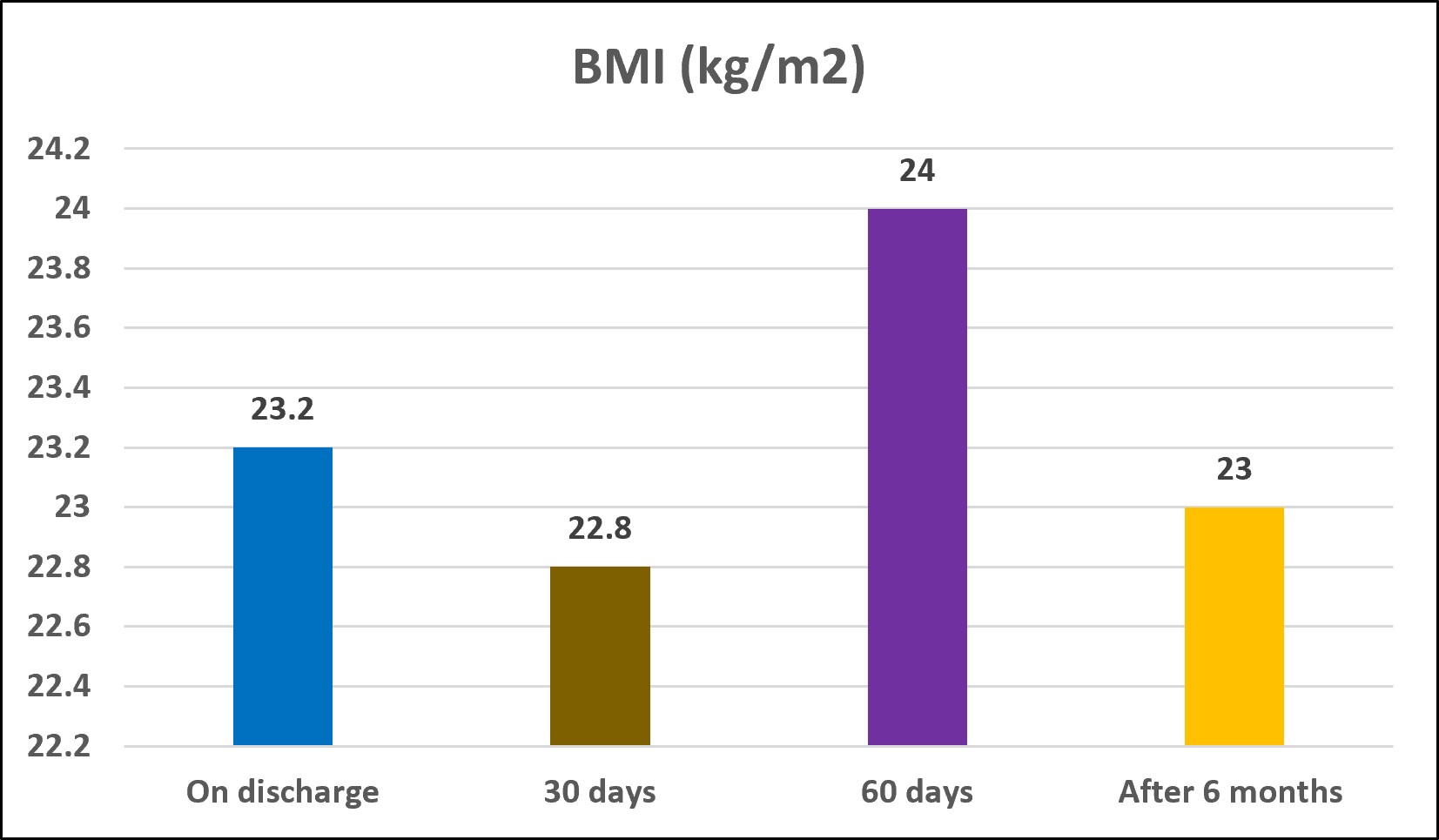
The chart demonstrates that the patient’s early post-liver transplant BMI experiences a temporary fluctuation rather than a permanent structural change.
- Fluid-Driven Volatility: The sharp rise to 24.0 kg/m² at POD-8 followed by a drop to 23.0 kg/m² at POD-11 reflects transient perioperative fluid shifts (retention and subsequent diuresis) rather than actual changes in tissue mass.
- Return to Baseline: By Postoperative Day 11, the BMI successfully stabilizes near the patient’s pre-operative baseline of 23.2 kg/m².
- Clinical Indicator: This overall normalization curve serves as a positive clinical indicator, suggesting stabilizing volume status, resolving surgical edema, and adequate early graft function
Follow up investigations
Hemoglobin
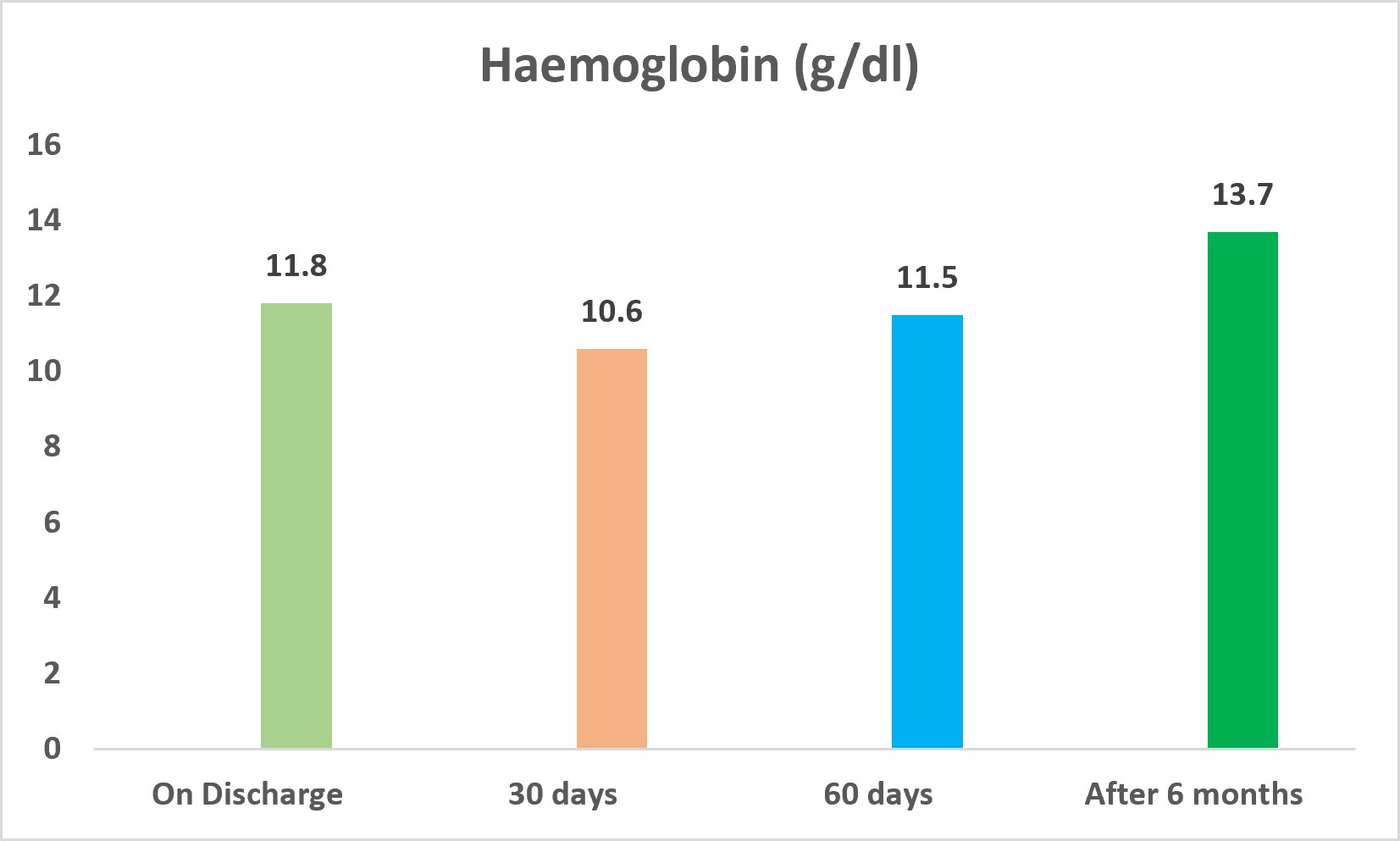
- Initial Post-Discharge Drop: The decline from 11.8 g/dl to 10.6 g/dl at 30 days is consistent with mild post-operative or post-illness anemia, which could stem from delayed surgical bleeding, iron store depletion, or ongoing inflammation suppressing bone marrow activity.
- Delayed Recovery Response: The upward turn to 11.5 g/dl by day 60 indicates that the patient’s body has begun actively regenerating red blood cells, likely supported by a stabilized health status or nutritional recovery.
- Long-Term Optimization: Reaching 13.7 g/dl after 6 months suggests a complete resolution of anemia, indicating that the patient’s bone marrow has fully corrected the deficiency and returned to a healthy, normal baseline level.
Albumin
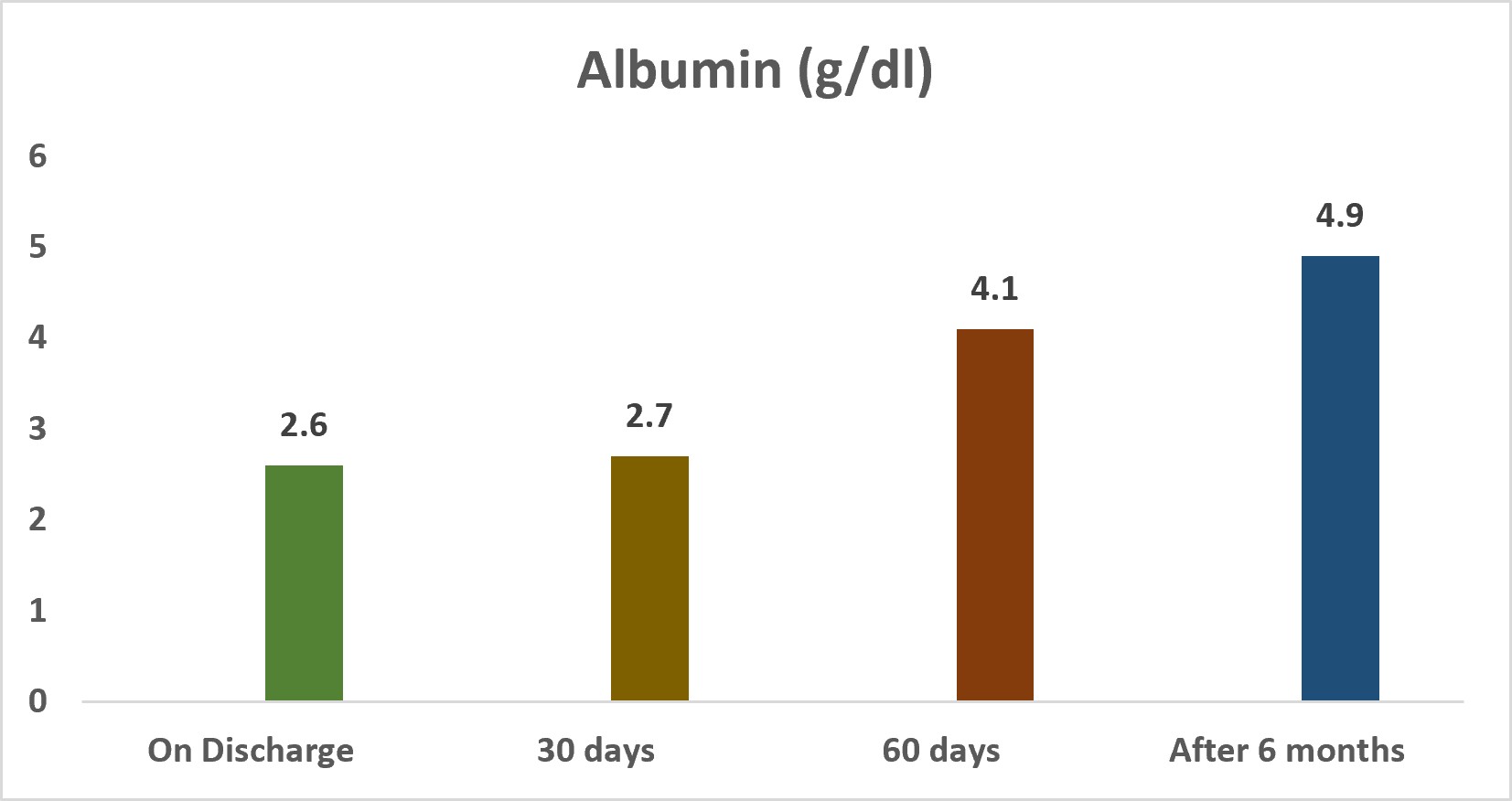
- Delayed Nutritional Recovery: The minimal change between discharge and the 30-day mark suggests that the body’s metabolic demands remained high or that nutritional intake was still adjusting during the initial month of recovery.
- Robust Metabolic Turnaround: The sharp rise to ~4.1 g/dl by 60 days shares characteristics with an active recovery phase. This indicates that systemic inflammation has been resolved, hepatic synthetic function has normalized, and positive nitrogen balance has been re-established.
- Long-Term Optimization: The final level of ~4.9 g/dl after 6 months seems to confirm complete physiological stabilization, indicating optimal nutritional health and normal visceral protein stores.
Conclusion
The clinical intervention carried out in the hospital for a liver transplant patient successfully improved the patient’s nutritional status during the recovery process. Nutritional therapy plays a vital role as a supportive measure alongside clinical treatments in all phases of liver transplantation, helping to prevent protein-energy malnutrition (PEM) and enhance the patient’s overall nutritional condition in both the preoperative and postoperative stages.
Patients with end-stage liver disease often face significant nutritional and metabolic challenges, which can negatively affect their morbidity, mortality, and quality of life. These issues can be effectively addressed through a multidisciplinary approach that combines surgical care, nutritional counseling, targeted interventions, and consistent follow-up. In the immediate post-transplant phase, a personalized nutrition plan was created to meet the patient’s increased metabolic demands and to prevent deficiencies in both macro nutrients and micro-nutrients. For long-term care, the focus shifts to managing and preventing metabolic complications that may arise after transplantation. Regular follow-ups, including routine liver function tests (LFTs), are essential for monitoring the patient’s health. Additionally, a sustainable diet plan provided by a clinical nutritionist adds significant value to maintaining and improving the patient’s nutritional well-being.
The synchronized normalization of albumin and hemoglobin indicates that the transplanted organ is functioning well, systemic inflammation has resolved, and the patient has successfully transitioned from an acute catabolic state into a healthy metabolic baseline
References
- ESPEN Guideline on Clinical Nutrition in Liver Disease. Clinical Nutrition. 2019. Evidence-based nutrition care pre‑ and post‑liver transplant
- ASPEN Clinical Guidelines: Nutrition Support in Adult Acute and Chronic Liver Disease. JPEN. Nutrition assessment, energy & protein needs
- Plauth M, et al. ESPEN Guidelines on Enteral Nutrition: Liver Disease. Clinical Nutrition. Enteral feeding recommendations
- McClave SA, et al. Guidelines for the Provision of Nutrition Support Therapy. ASPEN/SCCM. ICU and post‑transplant nutrition support
- Charlton M. Nutrition in liver transplantation. American Journal of Transplantation.Metabolic changes and long‑term care
- Kaido T, et al. Nutritional therapy after liver transplantation. Transplantation Proceedings. Post‑operative nutrition strategies
- Butterworth RF. Malnutrition in liver disease. Journal of Hepatology. Impact of malnutrition and recovery
- Mueller C, et al. ASPEN Adult Nutrition Support Core Curriculum. Practical clinical nutrition guidance
- Sherlock S, Dooley J. Diseases of the Liver and Biliary System (Textbook) Foundational hepatology nutrition concepts
- Mahan LK, Raymond JL. Krause’s Food & the Nutrition Care Process Diet planning and MNT application