
Persistent hypertension secondary to right adrenal pheochromocytoma managed by laparoscopic adrenalectomy
Savitha1*, Gowdham Pannirselvam2
1DNS, Kauvery Hospital, Marathahalli, Bangalore
2Senior Nurse Educator Kauvery Hospital, Marathahalli, Bangalore
*Correspondence
Abstract
Pheochromocytoma is a rare catecholamine-secreting neuroendocrine tumour arising from chromaffin cells of the adrenal medulla and represents an uncommon but clinically significant cause of secondary hypertension. Early recognition is essential because delayed diagnosis may result in severe cardiovascular and metabolic complications. We report the case of a 69-year-old female who presented with persistent hypertension and was subsequently diagnosed with a right adrenal pheochromocytoma. Following comprehensive multidisciplinary evaluation involving urology, endocrinology, cardiology, and critical care teams, the patient underwent a successful right laparoscopic adrenalectomy. The postoperative period was uneventful, and the patient was discharged in a hemodynamically stable condition. This case highlights the importance of considering pheochromocytoma in patients presenting with resistant hypertension and demonstrates the effectiveness of minimally invasive surgical management.
Keywords: Pheochromocytoma; Secondary Hypertension; Adrenal Mass; Laparoscopic Adrenalectomy; Case Report.
Introduction
Pheochromocytoma is a rare neuroendocrine tumour that originates from the chromaffin cells of the adrenal medulla and is characterized by excessive production and secretion of catecholamines, primarily epinephrine and norepinephrine. The annual incidence is estimated to be between 2 and 8 cases per million population, accounting for less than 0.2% of all cases of hypertension. Despite its rarity, pheochromocytoma remains a clinically important condition because it is one of the few potentially curable causes of secondary hypertension [1].
The clinical manifestations of pheochromocytoma are highly variable and often depend on the pattern and quantity of catecholamine secretion. The classic triad of episodic headache, palpitations, and diaphoresis is observed in a subset of patients; however, many individuals present with persistent or resistant hypertension without the characteristic symptoms. Such atypical presentations frequently contribute to delayed diagnosis and increase the risk of complications, including hypertensive crisis, myocardial infarction, cardiac arrhythmias, cerebrovascular accidents, and sudden death [3].
Advances in imaging techniques and biochemical testing have improved the early detection of adrenal tumours. Once diagnosed, surgical excision remains the definitive treatment. Laparoscopic adrenalectomy has emerged as the gold standard approach for localized adrenal tumours due to its association with reduced postoperative pain, shorter hospital stays, faster recovery, and improved cosmetic outcomes compared with open surgery [2]..This report describes the successful diagnosis and management of a 69-year-old female presenting with persistent hypertension secondary to a right adrenal pheochromocytoma who underwent laparoscopic adrenalectomy with favourable postoperative outcomes.
Case Presentation
A 69-year-old female was admitted to the Department of Urology with complaints of persistent hypertension. The patient had a known history of hypertension and had been receiving antihypertensive medications prior to admission. Despite ongoing treatment, blood pressure control remained suboptimal, prompting further investigation into potential secondary causes of hypertension. On admission, the patient underwent comprehensive clinical evaluation. Her vital signs revealed a blood pressure of 144/89 mmHg, pulse rate of 108 beats per minute, respiratory rate of 22 breaths per minute, body temperature of 98.4°F, and oxygen saturation of 97% on room air. Physical examination demonstrated that the patient was conscious, alert, and oriented. Cardiovascular examination revealed normal first and second heart sounds without murmurs. Respiratory examination showed bilaterally equal air entry with normal breath sounds. Abdominal examination revealed a soft, non-tender abdomen with normal bowel sounds. Neurological examination was unremarkable.
Given the persistence of hypertension despite treatment, further investigations were performed. Diagnostic imaging identified a right adrenal mass suggestive of pheochromocytoma. Additional evaluation demonstrated an enlarged liver and detailed vascular anatomy, including drainage of the adrenal vein into the inferior vena cava and arterial supply arising from the right renal artery. These findings supported the diagnosis of a functional adrenal tumor contributing to the patient’s hypertensive state.
Following diagnosis, the patient was evaluated by a multidisciplinary team consisting of specialists in urology, endocrinology, cardiology, and critical care medicine. After detailed assessment and optimization of the patient’s clinical condition, surgical intervention was planned. Informed consent was obtained after explaining the nature of the disease, surgical procedure, potential risks, benefits, and expected outcomes. On 25 May 2026, the patient underwent elective right laparoscopic adrenalectomy under general anaesthesia. The procedure was performed successfully without intraoperative complications. Intraoperative findings confirmed the presence of a right adrenal mass consistent with pheochromocytoma. The tumour was completely excised, and the specimen was sent for histopathological examination to establish definitive diagnosis.
During hospitalization, the patient received comprehensive medical management, including antihypertensive therapy, analgesics, antibiotics, antiemetics, proton pump inhibitors, and supportive care. Continuous monitoring of blood pressure and cardiovascular status was maintained throughout the perioperative period. The patient demonstrated satisfactory postoperative recovery without evidence of significant complications such as bleeding, infection, hemodynamic instability, or adrenal insufficiency. The postoperative course was uneventful, and the patient’s blood pressure remained adequately controlled with medical therapy. The surgical wounds healed appropriately, and the patient was able to resume oral intake and ambulation without difficulty. At the time of discharge, the patient was hemodynamically stable and symptomatically improved. She was advised to continue antihypertensive medications, monitor blood pressure regularly, and attend follow-up consultation after one week with the histopathology report. Instructions were provided regarding recognition of warning signs, including fever, vomiting, and difficulty in passing urine, for which immediate medical attention was recommended.
The successful outcome observed in this patient highlights the importance of early recognition and multidisciplinary management of pheochromocytoma. Surgical excision remains the cornerstone of treatment and offers the potential for significant improvement in blood pressure control and overall quality of life.
Discussion
Pheochromocytoma is a rare catecholamine-producing neuroendocrine tumour arising from chromaffin cells of the adrenal medulla. Although uncommon, it remains one of the most important causes of secondary hypertension because timely diagnosis and treatment can result in complete resolution or significant improvement of blood pressure control. The prevalence of pheochromocytoma among hypertensive patients is estimated to be less than 0.2%; however, its clinical significance is considerable due to the potentially life-threatening cardiovascular complications associated with excessive catecholamine secretion [1].. The present case involved a 69-year-old female who presented with persistent hypertension and was subsequently diagnosed with a right adrenal pheochromocytoma. The patient’s clinical presentation was relatively atypical, as she did not demonstrate the classical triad of headache, diaphoresis, and palpitations commonly associated with catecholamine excess. Similar atypical presentations have been described in the literature, particularly among elderly patients, where hypertension may be the sole presenting symptom. Such cases emphasize the importance of considering secondary causes in patients with resistant or unexplained hypertension [2].
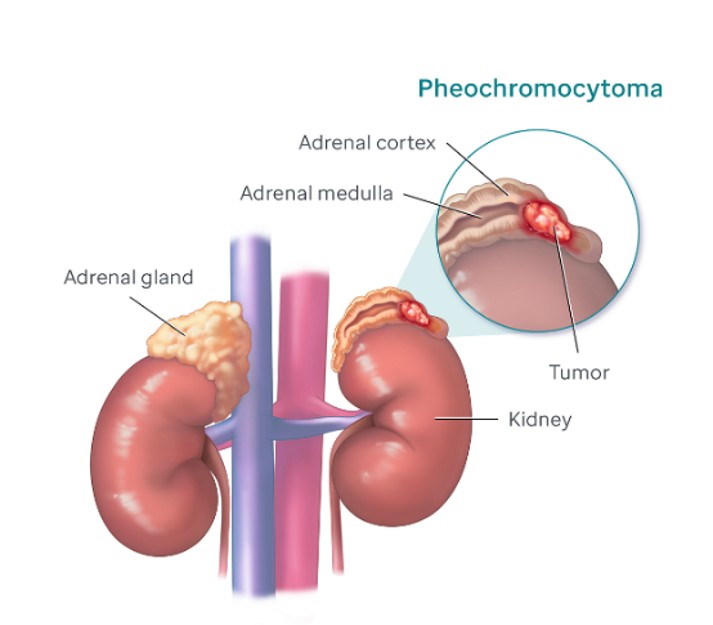
Image Source: St Jude Children’s Research Hospital, Pheochromocytoma
The pathophysiology of pheochromocytoma is primarily related to excessive secretion of catecholamines, including norepinephrine, epinephrine, and dopamine. These hormones act on alpha- and beta-adrenergic receptors, resulting in vasoconstriction, tachycardia, increased cardiac output, and elevated systemic vascular resistance. Prolonged exposure to high catecholamine levels can lead to persistent hypertension, left ventricular hypertrophy, cardiomyopathy, arrhythmias, myocardial infarction, and cerebrovascular accidents [9]..In the current case, persistent hypertension prompted further diagnostic evaluation, leading to the identification of a right adrenal mass. Advances in imaging modalities such as computed tomography (CT) and magnetic resonance imaging (MRI) have significantly improved the detection of adrenal tumours. Imaging studies not only facilitate localization of the lesion but also provide valuable information regarding tumour size, vascular anatomy, and potential local invasion. In this patient, imaging findings revealed a right adrenal mass with identifiable venous drainage into the inferior vena cava and arterial supply from the right renal artery, information that was essential for surgical planning.
Management of pheochromocytoma requires a multidisciplinary approach involving endocrinologists, surgeons, anaesthesiologists, cardiologists, intensivists, and nursing professionals. Preoperative optimization is particularly important because manipulation of the tumour during surgery can result in massive catecholamine release, causing severe fluctuations in blood pressure and heart rate. Appropriate preoperative pharmacological preparation with alpha-adrenergic blockade followed by beta-blockade when necessary has been shown to reduce perioperative morbidity and mortality [3]..The definitive treatment for pheochromocytoma is complete surgical excision. Over the past two decades, laparoscopic adrenalectomy has become the preferred surgical technique for localized adrenal tumours. Compared with traditional open surgery, laparoscopic adrenalectomy is associated with reduced intraoperative blood loss, decreased postoperative pain, shorter hospitalization, lower complication rates, and faster recovery [6]. The successful use of laparoscopic adrenalectomy in the present case is consistent with current international recommendations for the management of adrenal tumours. An important aspect of perioperative management is anaesthetic control. Patients with pheochromocytoma are particularly vulnerable to hemodynamic instability during induction, tumour manipulation, and tumour removal. Close monitoring of blood pressure, cardiac rhythm, and fluid balance is essential throughout the procedure. In this case, careful intraoperative management contributed to an uneventful surgical course and successful postoperative recovery.
The postoperative period in patients undergoing adrenalectomy requires vigilant observation for complications such as hypotension, hypoglycaemia, bleeding, infection, and adrenal insufficiency. Removal of the catecholamine-producing tumour often results in a sudden reduction in circulating catecholamine levels, which may precipitate postoperative hypotension. Fortunately, the patient in the present case remained hemodynamically stable throughout the recovery period and did not experience significant complications. Histopathological examination remains the gold standard for confirming the diagnosis of pheochromocytoma. Although histological evaluation is useful in establishing the diagnosis, distinguishing benign from malignant pheochromocytoma remains challenging because malignancy is defined primarily by the presence of local invasion or distant metastasis rather than histological appearance alone. Long-term follow-up is therefore recommended for all patients following adrenalectomy to monitor for recurrence or metastatic disease [4].
The prognosis following successful surgical excision is generally favorable. Studies have demonstrated significant improvement in blood pressure control after adrenalectomy, with many patients requiring fewer antihypertensive medications and some achieving complete resolution of hypertension. Early diagnosis and prompt intervention remain the most important determinants of outcome [5]. This case contributes to the growing body of evidence supporting laparoscopic adrenalectomy as a safe and effective treatment modality for pheochromocytoma. It further highlights the need for heightened clinical suspicion in patients presenting with persistent hypertension, particularly when conventional treatment fails to achieve adequate blood pressure control. Recognition of pheochromocytoma as a potentially curable cause of secondary hypertension can significantly improve patient outcomes and reduce the risk of serious cardiovascular complications.
Nursing Management and Nursing Implications
Nursing care plays a pivotal role in the successful management of patients with pheochromocytoma throughout the preoperative, intraoperative, and postoperative phases. Comprehensive nursing assessment, continuous monitoring, patient education, and interdisciplinary collaboration contribute significantly to patient safety and positive clinical outcomes.
During the preoperative period, nursing responsibilities include detailed assessment of cardiovascular status, monitoring of blood pressure trends, administration of prescribed medications, and identification of symptoms related to catecholamine excess. Nurses play a crucial role in preparing patients both physically and psychologically for surgery. Education regarding the disease process, planned surgical procedure, postoperative expectations, and recovery process helps reduce anxiety and improve patient cooperation. Continuous monitoring of vital signs is particularly important in patients with pheochromocytoma because fluctuations in blood pressure and heart rate may occur due to excessive catecholamine secretion. Nurses must be vigilant in identifying signs of hypertensive crisis, arrhythmias, chest pain, severe headache, or neurological symptoms and promptly communicate abnormalities to the healthcare team.
Following adrenalectomy, postoperative nursing care focuses on maintaining hemodynamic stability, pain management, prevention of complications, and promotion of early recovery. Frequent monitoring of blood pressure, heart rate, oxygen saturation, respiratory status, and fluid balance is essential. Nurses are responsible for assessing the surgical site for signs of bleeding, infection, or wound complications while ensuring adherence to aseptic techniques. Pain management represents another important nursing responsibility. Effective assessment using validated pain scales facilitates timely administration of analgesics and improves patient comfort. Early mobilization, respiratory exercises, and adequate hydration should be encouraged to reduce the risk of postoperative complications such as deep vein thrombosis, atelectasis, and constipation.
Patient education remains a critical component of discharge planning. Nurses should provide clear instructions regarding medication adherence, blood pressure monitoring, wound care, follow-up appointments, dietary recommendations, and recognition of warning signs requiring medical attention. Education empowers patients and caregivers to actively participate in recovery and promotes long-term health outcomes. The present case demonstrates the significant contribution of nursing care to the successful management of pheochromocytoma. Through continuous assessment, vigilant monitoring, patient advocacy, and interdisciplinary collaboration, nurses play a central role in ensuring safe and effective perioperative care.
Conclusion
Pheochromocytoma is a rare but potentially life-threatening endocrine tumour that should be considered in patients presenting with persistent or resistant hypertension. Early recognition and accurate diagnosis are essential to prevent serious cardiovascular complications associated with prolonged catecholamine excess. This case highlights the successful diagnosis and management of a 69-year-old female with right adrenal pheochromocytoma who underwent laparoscopic adrenalectomy with favourable postoperative outcomes. The case emphasizes the importance of multidisciplinary collaboration among surgeons, endocrinologists, anaesthesiologists, critical care specialists, and nursing professionals in achieving optimal patient outcomes. Laparoscopic adrenalectomy remains the treatment of choice for localized pheochromocytoma because of its safety, effectiveness, and minimally invasive nature. Furthermore, comprehensive nursing care is fundamental in ensuring perioperative stability, promoting recovery, preventing complications, and enhancing patient education. Timely surgical intervention combined with evidence-based perioperative management can result in excellent prognosis and substantial improvement in quality of life for patients affected by pheochromocytoma.
References
- Lenders JWM, Duh QY, Eisenhofer G, Gimenez-Roqueplo AP, Grebe SK, Murad MH, et al. Pheochromocytoma and paraganglioma: an endocrine society clinical practice guideline. J Clin Endocrinol Metab. 2014;99(6):1915–42.
- Young WF Jr. Pheochromocytoma and paraganglioma in clinical practice. Mayo Clin Proc. 2019;94(10):1962–78.
- Whitelaw BC, Prague JK, Mustafa OG, Schulte KM, Hopkins PA, Gilbert JA, et al. Phaeochromocytoma crisis. Clin Endocrinol (Oxf). 2014;80(1):13–22.
- Fishbein L, Leshchiner I, Walter V, Danilova L, Robertson AG, Johnson AR, et al. Comprehensive molecular characterization of pheochromocytoma and paraganglioma. Cancer Cell. 2017;31(2):181–93.
- Williams TA, Lenders JWM, Mulatero P, Burrello J, Rottenkolber M, Adolf C, et al. Outcomes after adrenalectomy for unilateral primary aldosteronism and pheochromocytoma. Lancet Diabetes Endocrinol. 2017;5(9):689–99.
- Brunt LM. The positive impact of laparoscopic adrenalectomy on complications of adrenal surgery. Surg Endosc. 2006;20(2):264–7.
- Neumann HPH, Young WF Jr, Eng C. Pheochromocytoma and paraganglioma. N Engl J Med. 2019;381(6):552–65.
- Manger WM. An overview of pheochromocytoma. Ann N Y Acad Sci. 2006;1073:1–20.
- Mannelli M, Lenders JWM, Pacak K, Parenti G, Eisenhofer G. Subclinical phaeochromocytoma. Best Pract Res Clin Endocrinol Metab. 2018;32(2):173–84.
- Pacak K. Preoperative management of pheochromocytoma. Endocr Pract. 2007;13(2):203–6.