
A complex symptomatic pararenal abdominal aortic aneurysm with impending rupture requiring open repair and right renal artery reimplantation
Leema Rebekal Rosy1*, Jency Nirmala2, Esthar Rani3
1Deputy Nursing Superintendent, Kauvery Hospital, Tennur, Trichy, Tamil Nadu
2Nursing Supervisor, Kauvery Hospital, Tennur, Trichy, Tamil Nadu
3Nursing Superintendent, Kauvery Hospital, Tennur, Trichy, Tamil Nadu
*Correspondence
Abstract
Abdominal Aortic Aneurysm (AAA) is a potentially life-threatening vascular condition that may remain clinically silent until enlargement, symptoms or rupture occurs. Complex aneurysms involving the renal arteries present additional challenges because preservation of renal blood flow is essential during surgical repair. This case describes a young male patient with multiple cardiovascular and renal comorbidities who presented with abdominal and left flank pain and was diagnosed with a large symptomatic pararenal abdominal aortic aneurysm with features suggestive of impending rupture.
Key words: Abdominal Aortic Aneurysm (AAA); Renal blood flow
Introduction
An abdominal aortic aneurysm is a localized abnormal dilatation of the abdominal aorta. An arterial aneurysm is generally defined as a permanent localized dilatation of a vessel that is substantially larger than the expected normal diameter of the adjacent artery. AAA may remain asymptomatic and can be detected incidentally, but increasing aneurysm size, rapid expansion, abdominal or back pain, thromboembolism and rupture are important clinical concerns.
The major complication of AAA is rupture, which can result in massive internal haemorrhage, hemodynamic instability and death. Current vascular guidelines recommend vascular specialist assessment for patients with AAA and consider symptoms attributable to the aneurysm an important indication for repair. For asymptomatic fusiform aneurysms, the usual diameter threshold for elective repair in men is approximately 5.5 cm, although clinical decision-making also considers symptoms, morphology, growth, anatomy and operative risk.
Complex abdominal aortic aneurysms involving or extending close to the renal arteries require particularly careful planning. During open repair, temporary interruption of renal blood flow may contribute to postoperative acute kidney injury. Pre-existing chronic kidney disease, renal ischemia, blood loss, transfusion and cardiovascular comorbidities further increase the risk of postoperative renal dysfunction. Open repair may involve replacement of the diseased aortic segment with a prosthetic graft. When an important renal artery originates from or is incorporated into the aneurysmal segment, renal artery reconstruction or reimplantation may be required to preserve renal perfusion. Published case reports have demonstrated successful open AAA repair with renal artery reimplantation and renal-protection techniques in anatomically complex aneurysms. This case is clinically noteworthy because of the patient’s young age, very large symptomatic aneurysm, pararenal involvement, impending rupture features, renal artery involvement, chronic kidney disease, significant cardiovascular disease and the need for renal replacement therapy during the postoperative period.
Case Presentation
A 41-year-old male was admitted under the vascular surgery team with complaints of abdominal and left flank pain. Relevant medical history-The patient had the following comorbidities: Hypertension, chronic kidney disease, dyslipidaemia, coronary artery disease, left ventricular systolic dysfunction, previous cerebrovascular accident, hepatitis B surface antigen positivity, history of alcohol consumption, previous left ureteric calculus, which had passed spontaneously. He reported significant weight loss of approximately 20 kg over six months and poor appetite with early satiety. There was no significant history of chest pain or breathlessness at presentation.
Presenting Complaints
The patient initially developed abdominal pain with left-sided flank pain. He had previously been relatively asymptomatic and had stopped experiencing significant abdominal pain approximately 10 years earlier according to the clinical history but subsequently developed recurrent symptoms. He also reported: poor appetite, early satiety, significant weight loss, Intermittent fever, left flank discomfort, reduced exercise tolerance At the time of admission, he was conscious, oriented and afebrile.
Clinical Examination
General examination: The patient was conscious and oriented; He appeared pale but was afebrile.
Initial vital signs were approximately:
| Temperature | 97.5°F |
| Heart rate | 88/min |
| Blood pressure | 140/80 mmHg |
| SpO₂ | 98% on room air. |
- Abdominal examination: A large pulsatile abdominal mass was present. The mass extended approximately: From the xiphisternum to 1 cm below the umbilicus, approximately 4 cm on either side of the umbilicus, Visible pulsation was present. No bruit was heard over the mass.
- Peripheral vascular examination: Peripheral pulses were assessed bilaterally. The lower-limb pulses were clinically palpable, with no evidence of acute limb ischemia documented.
- Diagnostic Assessment: MRI aortography demonstrated: Fusiform aneurysmal dilatation of the abdominal aorta, Approximate size: 12.9 × 8.2 × 6.5 cm. Extension up to the aortic bifurcation, Circumferential eccentric thrombus, Maximum thrombus thickness approximately 24 mm, Patent lumen approximately 38 mm at the infrarenal abdominal aorta, No definite evidence of dissection. Small aneurysm at the origin of the right renal artery, left renal artery not clearly visualized. The large size, symptoms and complex anatomical relationship with the renal vessels made definitive vascular surgical management necessary.
Carotid and Vertebral Doppler: The study showed: Normal bilateral carotid Doppler study, Normal bilateral vertebral arteries. Echocardiography demonstrated: Global hypokinesia of the left ventricle, Moderate LV systolic dysfunction, ejection fraction approximately 38%, concentric left ventricular hypertrophy, grade II diastolic dysfunction, mild mitral regurgitation, trivial tricuspid regurgitation, no pulmonary arterial hypertension, no intracardiac thrombus or vegetation, no pericardial effusion, the reduced ejection fraction indicated significant cardiovascular risk before major open vascular surgery.
Clinical Diagnosis
Based on the clinical examination and imaging findings, the patient was diagnosed with: Large symptomatic pararenal abdominal aortic aneurysm with impending rupture features, associated thrombus and right renal artery involvement, in a patient with chronic kidney disease and significant cardiovascular comorbidities.
Surgical Management
The patient underwent:
Elective laparotomy and open abdominal aortic aneurysm repair with a 22 × 30 cm B-Braun graft and right renal artery reimplantation using a great saphenous vein graft. The procedure was performed under general anaesthesia with epidural anaesthesia.
Renal protection during surgery: Renal preservation was an important component of the procedure because the aneurysm involved the region of the renal arteries and the patient had pre-existing chronic kidney disease. The surgical team used renal protection measures including: Temporary renal artery control, Cold renal perfusion, minimization of renal ischemic time, close intraoperative hemodynamic monitoring, re implantation of the right renal artery
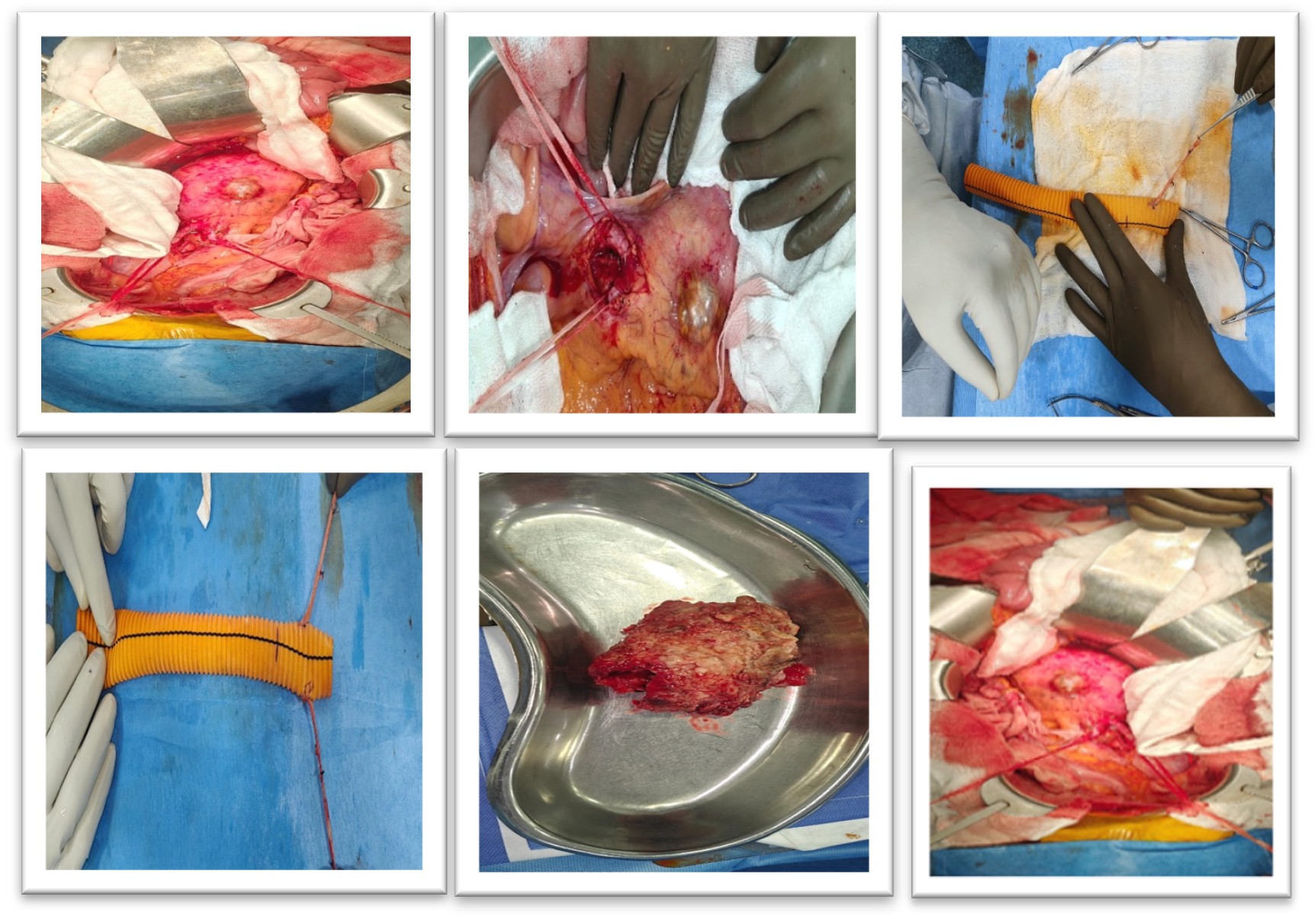
Elective laparotomy and open abdominal aortic aneurysm repair with a 22 × 30 cm B-Braun graft and right renal artery reimplantation using a great saphenous vein graft.
Postoperative monitoring of urine output and renal function: Renal protection is particularly important in complex AAA repair because renal ischemia and pre-existing CKD are recognized risk factors for postoperative acute kidney injury.
Perioperative Blood Loss and Resuscitation
Significant bleeding occurred during the proximal anastomosis. The anaesthesia team initiated prompt resuscitation with blood products. The operative documentation recorded approximately 6.5 L blood loss and transfusion of packed red blood cells, fresh frozen plasma, platelets and cryoprecipitate. The large blood loss required: Continuous hemodynamic monitoring, Blood-product replacement, Coagulation monitoring, Maintenance of adequate tissue perfusion, Monitoring for hypothermia and metabolic abnormalities, Close postoperative ICU observation
Postoperative Course
Following surgery, the patient was transferred to the intensive care unit.
Initially he required: Mechanical ventilation, Inotropic support, Invasive hemodynamic monitoring, Central venous access, Arterial line monitoring, Urinary catheterization, Close fluid balance monitoring, Serial laboratory investigations
Because of decreased urine output in the setting of chronic kidney disease and major vascular surgery, nephrology consultation was obtained.
The patient subsequently underwent Continuous Renal Replacement Therapy (CRRT) for approximately 48 hours.
The postoperative care focused on: Maintaining adequate renal perfusion, Monitoring urine output, Monitoring serum creatinine and electrolytes, Hemodynamic stabilization, Prevention of respiratory complications, Pain control, monitoring for bleeding, Peripheral vascular assessment, Infection prevention, Nutritional support, Early mobilization when clinically appropriate
The patient gradually improved, was weaned from intensive support and became clinically stable.
Nursing Assessment and Management
Nursing management was an important component of the patient’s recovery because he had a large complex aneurysm, major abdominal surgery, cardiovascular dysfunction, CKD, massive blood loss and temporary renal replacement therapy.
Nursing Diagnosis: Acute Pain
- Related to abdominal surgical incision and tissue trauma
- Evidenced by postoperative pain score-8
Nursing management: Assessed pain using an appropriate pain scale, Monitored pain characteristics, location and severity. Administered prescribed analgesics. Evaluated response to analgesic therapy. Maintained comfortable positioning. Supported the abdominal incision during coughing and movement. Encouraged relaxation and controlled breathing techniques. Monitored for excessive sedation and respiratory depression.
Nursing Diagnosis 2: Risk for Ineffective Tissue Perfusion
Related to altered aortic blood flow, vascular reconstruction and potential hemodynamic instability.
Nursing management: Monitored blood pressure, heart rate and oxygen saturation. Assessed peripheral pulses regularly. Monitored limb colour, temperature and capillary refill. Assessed for signs of acute limb ischemia. Monitored level of consciousness and peripheral perfusion. Maintained prescribed hemodynamic targets. Monitored hypotension, tachycardia or loss of peripheral pulses.
Nursing Diagnosis 3: Risk for Decreased Cardiac Output
Related to reduced left ventricular systolic function, coronary artery disease and major vascular surgery.
Nursing management: Continuous ECG monitoring in the immediate postoperative period.
Monitored heart rate and rhythm. Monitored blood pressure and perfusion. Administered prescribed inotropes and cardiovascular medications. Monitored for signs of myocardial ischemia. Assessed for chest pain, dyspnoea and new ECG changes. Maintained adequate oxygenation.
Avoided excessive fluid administration while maintaining adequate perfusion. Monitored haemoglobin and signs of ongoing blood loss.
Patients underwent open AAA repair required close postoperative monitoring for myocardial ischemia, ventricular dysfunction, respiratory complications, bleeding, bowel dysfunction and renal dysfunction.
Nursing Diagnosis 4: Ineffective Renal Perfusion
Related to chronic kidney disease, intraoperative renal ischemia, major blood loss and hemodynamic changes.
Nursing management: Maintained strict intake and output monitoring. Hourly urine output monitored during the critical postoperative period. Monitored urine colour and characteristics. Monitored serum creatinine, urea and electrolytes. Observed for fluid overload.
Monitored daily body weight when appropriate. Avoided nephrotoxic medications unless specifically indicated. Ensured prescribed renal-protection measures are followed.
Monitored CRRT access and circuit function. Maintained aseptic technique during CRRT management. Monitored for electrolyte abnormalities.
Postoperative renal dysfunction is an important complication after complex aortic surgery, particularly in patients with pre-existing CKD and renal ischemia.
Nursing Diagnosis: Risk for Bleeding
Related to extensive vascular reconstruction, anticoagulation during surgery and major intraoperative blood loss.
Nursing management: Monitored vital signs frequently. Assess surgical drains and abdominal dressing. Observed for increasing abdominal distension. Monitored haemoglobin and coagulation parameters. Monitored drain output. Assessed for tachycardia and hypotension. Maintained availability of blood products as clinically indicated. Observed for bleeding from invasive lines and wound sites.
Nursing Diagnosis 6: Impaired Gas Exchange, Risk for Respiratory Complications
Related to major abdominal surgery, prolonged anaesthesia and postoperative mechanical ventilation.
Nursing management: Monitored respiratory rate, pattern and SpO₂ .Assessed ventilator parameters and alarms while mechanically ventilated. Maintained airway patency. Performed oral and endotracheal care according to protocol. Encouraged deep breathing after extubation. Encouraged incentive spirometry when appropriate. Provided chest physiotherapy as indicated. Encouraged early mobilization when clinically stable. Monitored for atelectasis, pneumonia and respiratory distress. Postoperative respiratory optimization, analgesia and early extubation when appropriate are important components of recovery after open AAA repair.
Nursing Diagnosis: Impaired Physical Mobility
Related to abdominal surgery, pain, weakness and prolonged ICU stay.
Nursing management: Assessed baseline and progressive mobility. Repositioned regularly. Performed passive and active range-of-motion exercises. Encouraged sitting and ambulation when clinically stable. Coordinated with physiotherapy. Prevented pressure injuries. Encouraged gradual increase in activity. Provided assistance during mobilization to prevent falls.
Nursing Diagnosis: Risk for Infection
Related to major abdominal surgery, invasive vascular access, urinary catheter, mechanical ventilation and prolonged hospitalization.
Nursing management: Maintained strict hand hygiene. followed aseptic technique for invasive procedures. Monitored wound for redness, swelling, discharge or dehiscence. Monitored temperature and laboratory markers of infection. Provided catheter and central-line care according to institutional protocol. Administered prescribed antibiotics. Maintained ventilator-associated pneumonia prevention measures. Monitored surgical drains. Educated the patient regarding wound care.
Nursing Diagnosis: Deficient Knowledge
Related to inadequate knowledge regarding disease, medications, activity restriction and postoperative care.
Nursing management: Before discharge, the patient and family were educated regarding: Nature of abdominal aortic aneurysm importance of regular follow-up, medication adherence, antiplatelet/anticoagulant precautions as prescribed, blood pressure control, smoking and alcohol cessation, dietary modification, wound care, warning signs requiring immediate medical attention, avoiding heavy lifting and strenuous activity, importance of prescribed investigations, importance of renal follow-up.
The discharge instructions specifically emphasized avoiding injury, avoiding two-wheeler travel, avoiding squatting/Indian toilets, adherence to medication and watching for symptoms such as severe headache, chest pain, abdominal pain, dark urine and black stools.
Nursing Care During CRRT
Because of decreased urine output and underlying CKD, CRRT was initiated for approximately 48 hours. Monitored the CRRT machine and circuit. Maintained prescribed blood-flow and fluid-removal parameters. Monitored access-site integrity. Maintained strict aseptic technique.
Monitored blood pressure continuously or frequently as appropriate. Monitored for hypotension. Monitored electrolytes and acid-base status. Monitored anticoagulation according to the prescribed CRRT protocol. Monitored fluid balance. Recorded intake and output accurately. Assessed for circuit clotting. Monitored temperature. Communicated changes promptly to the nephrology and ICU teams. The patient’s renal status subsequently improved sufficiently to discontinue CRRT.
Discharge and Follow-Up
At discharge, the patient was clinically stable and ambulatory. Documented discharge condition included: General condition: good, Afebrile, Blood pressure approximately 120/80 mmHg, SpO₂ approximately 96%, Peripheral pulses palpable, no documented DVT, Surgical dressing clean, the patient was instructed to: Continued prescribed medications. Attend vascular surgery follow-up. Continue renal-function monitoring. Follow prescribed diet. Avoid strenuous activity and injury. Avoid two-wheeler travel during the recovery period. Avoid squatting/Indian toilets as advised. Monitor for abdominal or chest discomfort. Seek immediate medical attention for symptoms suggestive of bleeding or vascular complications. Follow-up was planned with vascular surgery, including laboratory investigations and clinical review.
Discussion
Abdominal aortic aneurysm is an important vascular condition because the disease may remain asymptomatic while the aneurysm progressively enlarges. The present case demonstrates how a patient can develop a very large and anatomically complex aneurysm despite being considerably younger than the typical age group encountered in screening populations.
The most important clinical feature in this patient was the combination of a very large aneurysm, abdominal/flank pain and intraoperative evidence of an impending rupture bleb. The aneurysm measured approximately 12.9 cm in its largest reported dimension, substantially exceeding conventional elective repair thresholds. Current Society for Vascular Surgery guidance recommends repair of symptomatic AAA when the symptoms are attributable to the aneurysm and recommends elective repair of low-risk men with fusiform AAA at approximately 5.5 cm or greater. The 2024 ESVS guideline similarly retains approximately 55 mm as the threshold at which repair may be considered in men, while emphasizing individualized assessment and discouraging repair of smaller asymptomatic aneurysms solely on diameter. In this patient, however, the decision for surgery was not based on aneurysm diameter alone. Symptoms, aneurysm morphology, anatomical complexity, renal artery involvement and impending rupture features all contributed to the need for intervention.
The aneurysm was anatomically challenging because of its relationship with the renal arteries. The right renal artery required reimplantation, while the left renal artery was not clearly identified preoperatively. In complex AAA surgery, preservation of renal perfusion is particularly important because renal ischemia may result from aortic cross-clamping. The risk is greater in patients with pre-existing CKD. Literature reviews report that postoperative AKI remains a significant complication following complex open aortic surgery, and pre-existing CKD, renal ischemia, blood loss and cardiovascular disease are important risk factors. Renal protection was therefore a major component of the operation. In the present case, cold renal perfusion was used during the period of renal artery control. Published reports of complex AAA repair have also described renal artery reimplantation combined with cold renal perfusion or other renal-protection strategies.
The postoperative course demonstrates the importance of anticipating renal complications. The patient had pre-existing CKD and experienced major blood loss during a technically demanding open repair. Reduced urine output subsequently required nephrology involvement and CRRT for approximately 48 hours. This was a significant postoperative challenge but was managed with close fluid-balance monitoring, renal replacement therapy and multidisciplinary care. A systematic review of renal perfusion in complex AAA open repair reported that AKI remains common following surgery and that postoperative dialysis can occur, although the available literature is heterogeneous regarding the optimal renal perfusion strategy. Thus, renal protection should be regarded as a multidisciplinary process involving the vascular surgeon, anesthesiologist, intensivist, nephrologist and nursing team.
The patient’s cardiovascular status also contributed substantially to perioperative risk. Echocardiography showed global LV hypokinesia with an EF of approximately 38%, while the history included CAD, hypertension and previous CVA. Major open vascular surgery produces significant physiological stress and can precipitate myocardial ischemia, ventricular dysfunction, respiratory complications and hemodynamic instability. Close ICU monitoring is therefore essential following open AAA repair. The massive intraoperative blood loss was another major challenge. Open repair of a large complex aneurysm may involve substantial blood loss because of the large vascular surface area, aortic clamping and technically difficult anastomosis. Prompt blood-product replacement and correction of coagulopathy are essential. In this case, rapid resuscitation by the anesthesia team allowed completion of the reconstruction.
Nursing care played a critical role throughout the perioperative pathway. Following vascular reconstruction, frequent assessment of blood pressure, heart rate, peripheral pulses, limb temperature and capillary refill is important to detect changes in perfusion. Postoperative monitoring must also include assessment for bleeding, respiratory complications, cardiac dysfunction, renal dysfunction, bowel complications and infection. Evidence-based vascular nursing guidance emphasizes standardized patient identification, baseline hemodynamic assessment, ECG and oxygen monitoring, postoperative vital-sign assessment, pain assessment and peripheral pulse assessment. In this patient, the nursing priorities extended beyond routine postoperative care because of the combination of major abdominal surgery, mechanical ventilation, cardiovascular dysfunction, CKD, CRRT, massive transfusion and vascular reconstruction. Accurate hourly urine-output monitoring was particularly important. Early recognition of oliguria allowed timely nephrology involvement and initiation of CRRT.
Respiratory nursing care was also important because prolonged ventilation and major abdominal surgery increase the risk of atelectasis and pulmonary complications. Appropriate airway care, ventilator monitoring, chest physiotherapy, analgesia, incentive spirometry and progressive mobilization are important components of recovery following major abdominal vascular surgery. Patient education is another important component of successful AAA management. The patient should understand the importance of medication adherence, blood pressure control, cardiovascular risk-factor modification, avoidance of smoking and alcohol, appropriate physical activity, follow-up imaging and recognition of warning symptoms.
This case also emphasizes the importance of multidisciplinary coordination. Successful management involved vascular surgery, anaesthesia, intensive care, nephrology, nursing, physiotherapy and other supporting services. The combination of early recognition, definitive surgical repair, renal preservation, aggressive postoperative monitoring and rehabilitation contributed to the patient’s eventual stabilization and discharge.
Strengths and Clinical Significance
The important strengths of this case include:
- The patient was relatively young for a large AAA.
- The aneurysm was very large and symptomatic.
- Imaging demonstrated complex renal arterial involvement.
- Intraoperative findings suggested impending rupture.
- Open repair required renal artery reconstruction.
- The patient had significant cardiovascular and renal comorbidities.
- Major blood loss required aggressive resuscitation.
- Postoperative renal dysfunction required temporary CRRT.
- The patient ultimately recovered and was discharged in stable condition.
- The case demonstrates the importance of comprehensive perioperative nursing management in complex vascular surgery.
Learning Points
- AAA may remain silent until it becomes large or symptomatic.
- Abdominal or flank pain in a patient with known AAA should be taken seriously.
- A very large symptomatic aneurysm carries a significant risk of rupture.
- Complex/pararenal aneurysms require careful assessment of renal arterial anatomy.
- Renal protection is particularly important in patients with pre-existing CKD.
- Major blood loss should be anticipated during complex open aortic repair.
- Close postoperative monitoring is essential for early detection of bleeding, cardiac dysfunction, respiratory complications and renal injury.
- Accurate urine-output monitoring is an important nursing responsibility after complex vascular surgery.
- CRRT can provide temporary renal support when postoperative renal dysfunction develops.
- Patient education and long-term vascular follow-up are essential after AAA repair.
- Multidisciplinary teamwork is critical for successful management of complex aortic disease.
Conclusion
This case describes a large symptomatic pararenal abdominal aortic aneurysm with impending rupture features in a relatively young male patient with chronic kidney disease and significant cardiovascular comorbidities. The aneurysm required complex open surgical repair with prosthetic graft replacement and right renal artery reimplantation. The procedure was complicated by significant blood loss and the patient subsequently required intensive care, mechanical ventilation, inotropic support and temporary CRRT because of reduced urine output and underlying renal dysfunction. Through coordinated vascular, anaesthetic, critical-care, nephrology and nursing management, the patient improved and was discharged in stable condition. The case emphasizes that successful management of complex AAA extends beyond the surgical procedure itself. Preoperative risk assessment, preservation of renal perfusion, meticulous hemodynamic monitoring, early recognition of postoperative complications, accurate fluid and urine-output monitoring, CRRT management when required, infection prevention, pain management, mobilization and comprehensive patient education are all essential components of care.